













We make complex innovation easier to understand.
Web Design Amsterdam
Amsterdam is full of organisations building what comes next. Biotech at Science Park, sustainable tech scale-ups, platforms that work in English from day one. What most of them share: their value depends on whether others understand their work.
That’s the work we do. For twenty years, from our studio in Amsterdam’s Houthavens, we’ve designed websites for organisations working on tomorrow’s world — for the investor who scans the site before the next funding round, the partner who reads through before the meeting, and the future hire who looks around before applying.
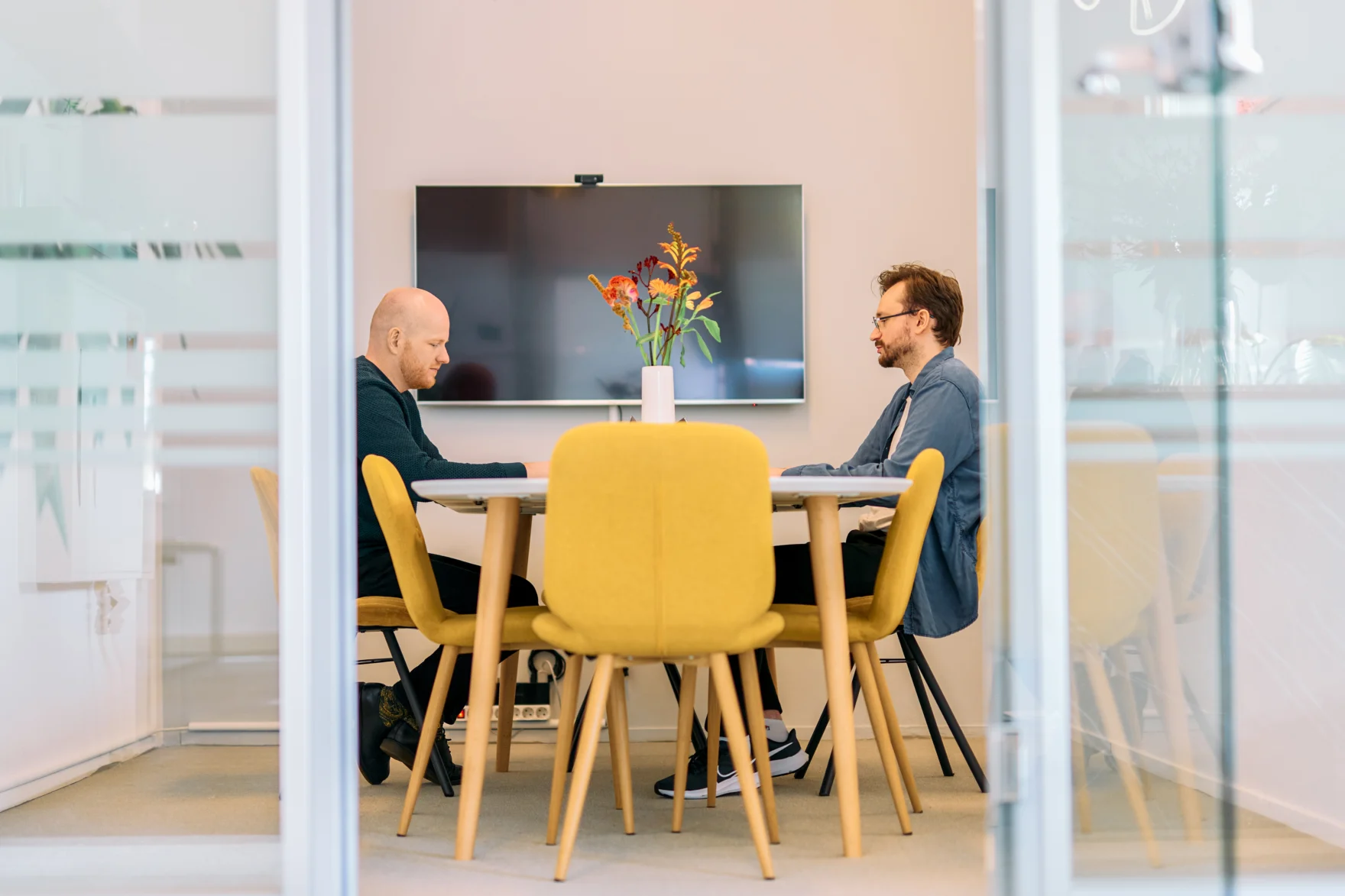
Close enough to sit around the table. Used to designing for readers far beyond the city.
4.9 average on Google, 44+ reviews
Why an Amsterdam web design agency
Web design doesn’t need a postcode. But for the organisations we work with, being close changes how a project runs — and how well the result lands.
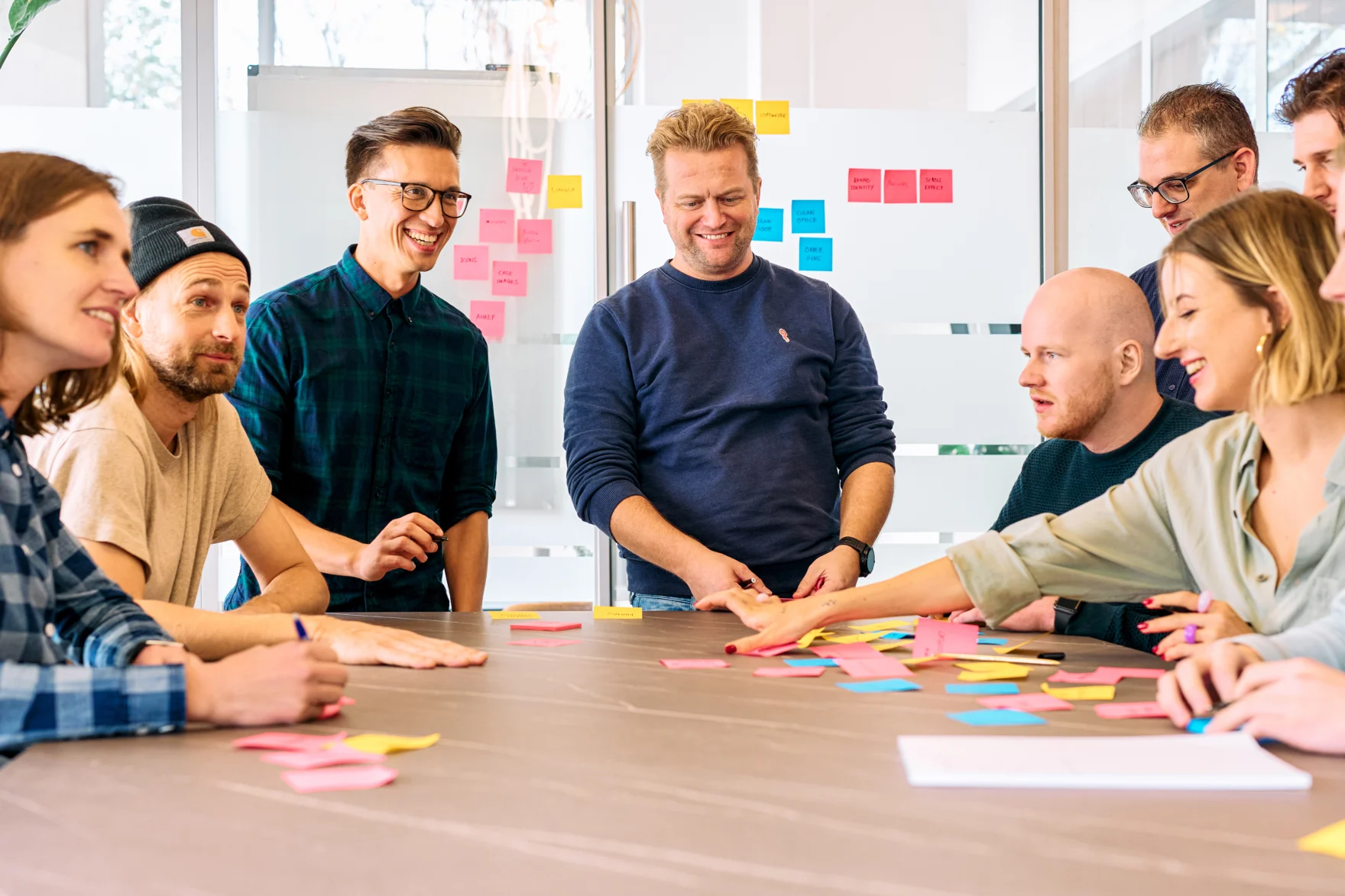
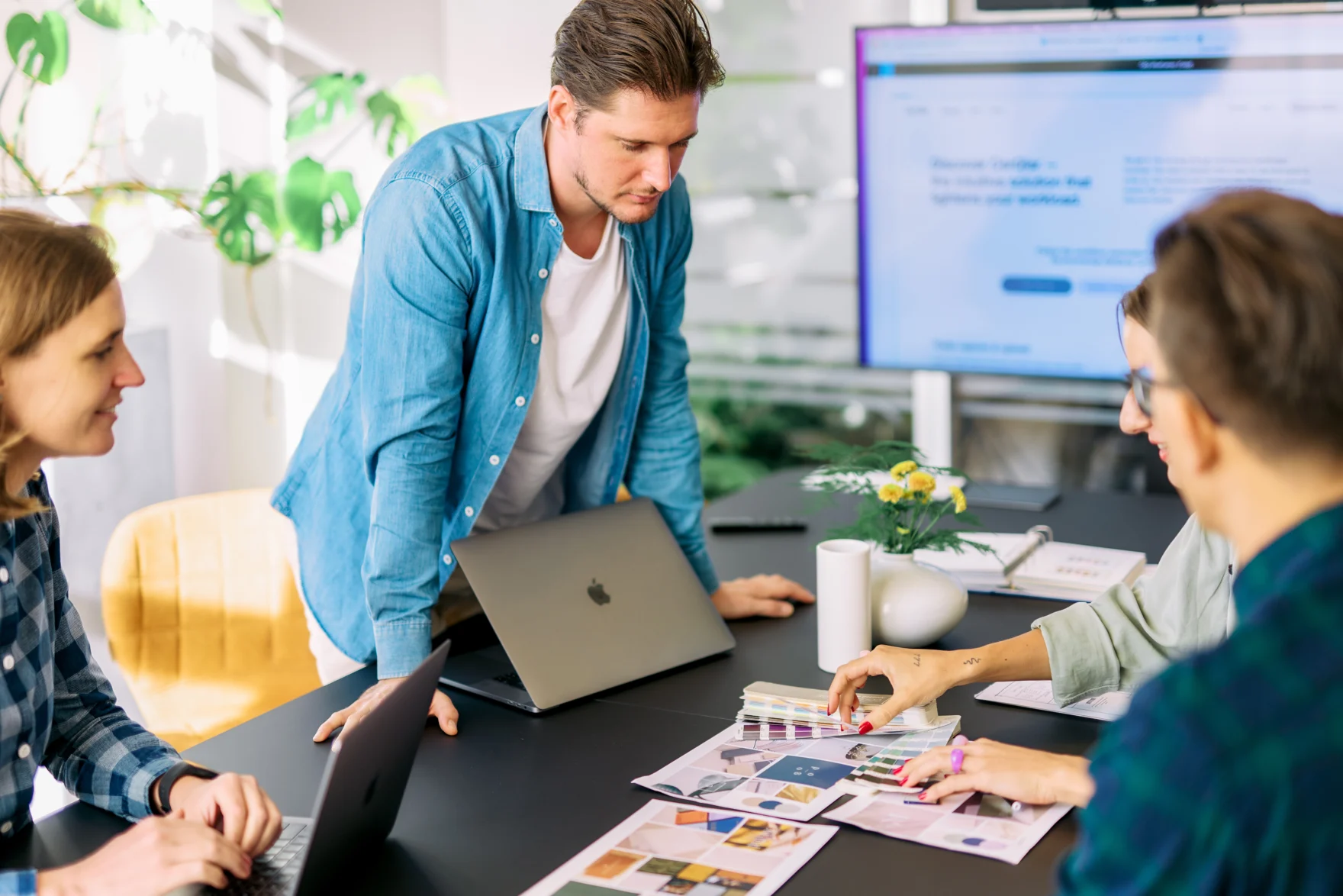
The moments that shape a website aren’t emails. They’re the kickoff where the real brief surfaces, the design review where a direction gets chosen, the workshop where your team says what the slides don’t.
Those moments work better in one room — and we’ve noticed why. Remote meetings tend to stay on the question and the answer. In the studio there’s room for the silences, the walk around, the conversation next to the project. That’s where the questions come from that change the outcome.
Our studio sits in the Houthavens, the corner of Amsterdam where much of the city’s agency and media world works. The rest of the collaboration runs remote, as it does for all our clients. But the decisions that set the course, we prefer to make face to face.
Amsterdam organisations rarely build for Amsterdam alone. The investor reading your site sits in Boston, the partner in Basel, the customer in Berlin.
Twenty years of working with the city’s biotech, life sciences and sustainable tech companies taught us who those readers are and what they look for. Technical depth for the engineer. Credibility for the investor. A clear story for the person who has to explain it internally.
A local partner, designing for an international reading audience. That’s the combination most of our Amsterdam clients come for.
Many Amsterdam companies work in English from day one. Their websites should too — not as a translation, but as the original.
We design and write in both languages, and decide with you which one leads. Structure, tone and terminology are built so both versions carry the same story, each in language that reads naturally.
For organisations recruiting internationally or raising capital abroad, that’s not a nice-to-have. It’s the difference between being understood and being skimmed.
Amsterdam is a small city. Its reach isn’t.
The organisations here compete with companies in London, Boston and Singapore — for funding, for partners, for talent. Their websites are judged by the same standard.
That’s the level we design for. Local in how we work with you, international in what the work has to hold up against.
4.9 average on Google, 44+ reviews
What we are good at, specifically
Websites that explain complex work
Most of our clients do work that’s hard to explain. A therapeutic platform, an industrial process, a technology most people have never heard of.
Our web designers make that understandable without flattening it. The engineer should recognise the depth, the investor should see the potential, and neither should have to work for it.
That’s a design question as much as a writing question. Structure, hierarchy and visuals carry as much of the explanation as the words do.
Conversion built into the journey
Conversion on a good website is rarely one click. The route from first visit to first conversation usually runs over weeks — a search, a deeper read, a forward to a colleague, and only then a call.
We design for that full journey: overview for the first visit, depth for the third, proof for the conversation after.
The result is a site that converts because every step makes sense — not because the homepage shouts louder.
Brand built into the structure
A brand grows stronger when it’s woven into the structure of a website, not pasted on top at the end.
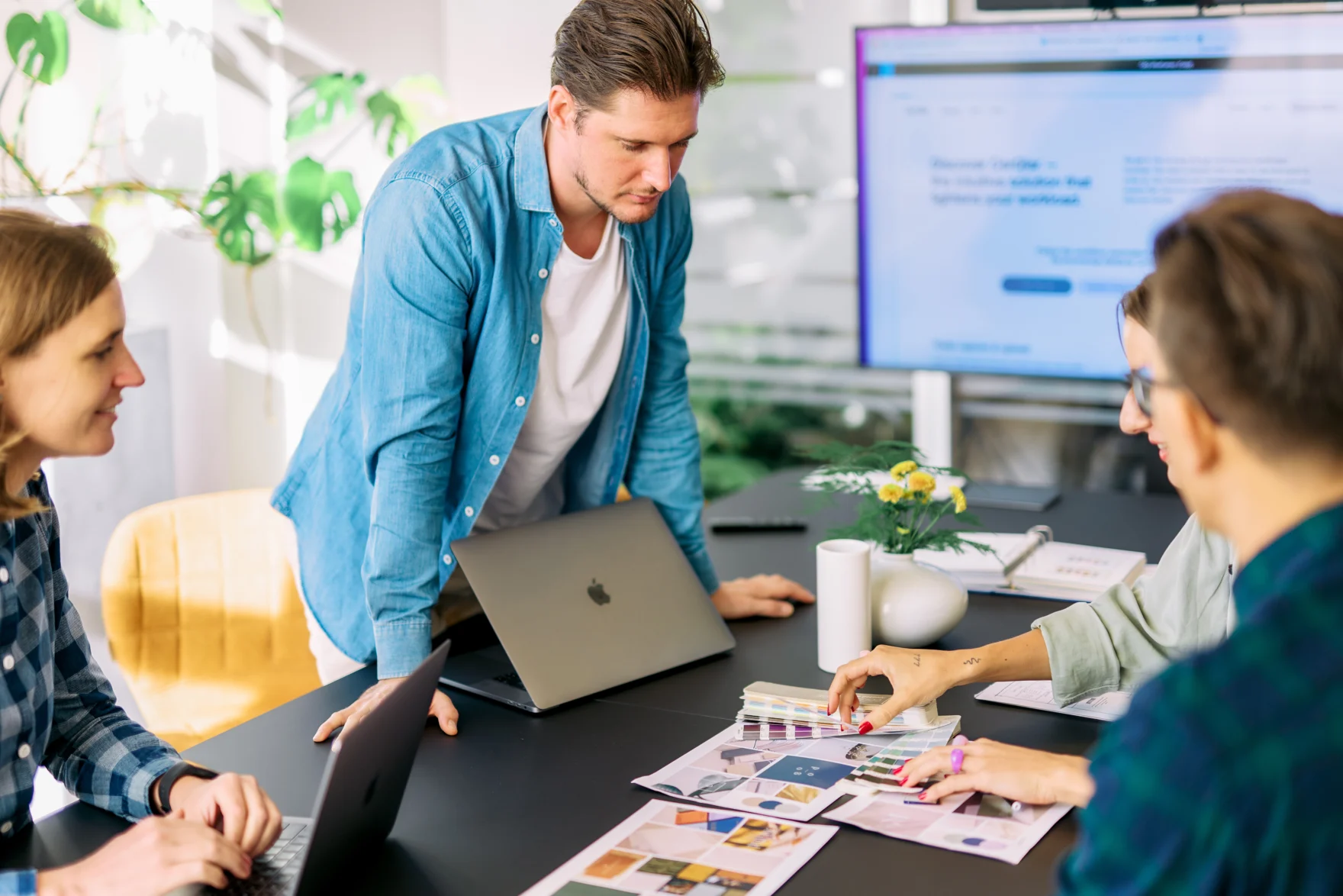
We design with your existing brand system in hand, or rebuild it when it no longer fits who you’ve become. Either way, the brand ends up in the grid, the typography, and the tone of every button.
Not as a layer on top, but as a thread running through everything.
Technology as a means, not a goal
WordPress, Webflow, headless CMS’s, AI-assisted development — the options are endless. We never start with the tech. We start with what your organisation needs in order to succeed.
For most websites WordPress is still the best choice: flexible, easy to work with, with room to grow. For larger platforms we build custom solutions. For smaller projects we increasingly use AI-assisted development — faster to ship, lighter on budget, without giving up on quality or design.
Technology is a means to create a digital environment that works for the people using it after we hand it over — today, tomorrow, and the years after.
“Great work travels.
But it usually starts around a table.”
— Marsmedia
What working with us looks like
At a new enquiry we call first — simply to hear whether we’re a fit. Then comes a discovery session where the core question surfaces together: the founder at the table, a UX designer, and someone from brand where needed.
Across twenty years and more than 300 websites, that’s been the constant: the projects that succeed start with the right people at the table — on both sides.
The design decision we defend most often: not trying to say everything. The more a page says, the more likely the visitor decides on their own — and leaves without a conversation.
We look for the single most important thing per screen: just enough to convince, with a clear next step. Calm isn’t a style choice; it’s conversion work.
What we often find in sites built elsewhere: back to the builder for every small change, at a cost. Not with us — our own block system lets your team build and edit pages without being able to break the site.
And when we develop new modules, existing clients simply get them too.
A live website is our starting point, not the finish. We set up the measurement — behaviour, conversion, findability — and adjust based on what the data shows.
Ninety per cent of our clients stay after the first project. That’s no coincidence: the work gets better the longer we measure.
“In web design Amsterdam, I enjoy strategically shaping elements to draw visitors’ attention and instill trust in their brand’s professionalism. It’s fulfilling to help clients effectively communicate their products or services through visually appealing and user-friendly designs.”
Nelson Eggermont
Lead of Design & UX
Every project here starts with a call. Yours can too.
How we work
Three steps. Everyone knows what is needed, and when.
We call first
Every enquiry starts with a phone call: is this a fit, can we genuinely add value? If not, we point you to someone better placed. If so, we plan a discovery session — the joint brainstorm where the real question surfaces.
We simplify
Most briefs want to say too much. We look for the single most important thing per page and keep the design calm — just enough to convince, with a clear next step. That’s the hardest part of the craft, and exactly where twenty years count.
We measure until it works
A website is never finished. Launch is the starting point: we measure behaviour and conversion, adjust based on the data, and your team keeps building in our block system — without coming back for every small change.
Discover the right services for your needs
Brand
Website
Frequently asked questions
For the moments that shape a project. Kickoffs, design reviews and content workshops work better in one room — that’s where the real brief surfaces and where decisions get made.
A local agency also knows the context you operate in. We’ve worked with Amsterdam’s innovation organisations for twenty years, so we know the readers your website has to convince — and most of them aren’t in Amsterdam.
The day-to-day collaboration runs remote either way. It’s the decisive moments where local pays off.
That depends on the scope, the depth of the content work, the integrations and the number of stakeholders — not on the city. Early in the conversation we share an estimate per phase, so you see what each part of the work costs before it begins.
For most organisations a website is an investment they make every three to five years. We’d rather help you spend that budget where it actually makes a difference than push for the most expensive version of the work.
Both, and often in parallel. Many of our Amsterdam clients work in English first; others lead in Dutch with an English version alongside.
We write both versions as originals rather than translations, so each reads naturally to its audience. And we set up the technical side — hreflang, URL structure — so search engines serve the right version to the right reader.
Yes — that’s part of why clients choose a local partner. Kickoffs, design presentations and workshops happen at our studio in the Houthavens — the corner of Amsterdam where much of the city’s agency and media world works — or at your office.
Between those moments, collaboration runs remote: short lines, regular check-ins, decisions documented. You get the speed of remote work, with the clarity of meeting in person when it matters.
A typical project runs ten to sixteen weeks from kick-off to launch. The exact timing depends on scope, the number of stakeholders, and the depth of the content work. Smaller refreshes can be done in six to eight weeks.
We plan the timeline in phases at the start of the project. So the team that has to defend it internally knows what gets delivered, and when, before the work begins.
Yes. Amsterdam’s startups and scale-ups are a natural fit for how we work — organisations at the point where the website has to grow up along with the company.
For early-stage teams we scale the approach to the budget, often with AI-assisted development to keep the build light. What we don’t scale down is the strategic work: knowing what the site has to say comes first, at any size.
We work with organisations building what comes next — biotech, life sciences, medtech, healthcare, sustainable tech, AI-driven companies, and innovative SaaS. Many of them are rooted in Amsterdam’s knowledge hubs, from Science Park to the Zuidas.
The common thread isn’t the sector. It’s the challenge: making complex innovation easier to understand for the people who matter — investors, partners, customers, and talent.
Both. Most of our sites are designed and built by the same team — web design and web development in Amsterdam, under one roof. Usually on WordPress, sometimes headless or on Webflow.
By keeping design and development in one team, we avoid the gap where intent gets lost in handover — and you have one accountable contact for the whole project.
Yes. Amsterdam is home base, not a boundary. Our work is split across the Netherlands, the rest of Europe, and a smaller number of US and UK clients.
Remote collaboration is part of every project. On-site sessions happen when they add real value.
When we don’t believe we can add real value.
That can mean the budget is too small for the strategic work that needs to come with it. Or that the brief asks for a visual refresh on a structure that isn’t right yet. Or that the organisation itself hasn’t decided yet what it really stands for.
Some work we decline as a rule: high-volume B2C, dropshipping, quick commerce. We work for companies that genuinely matter — and a client can only spend their budget once. If we wouldn’t be proud of the work three or four years from now, we say so — even when it costs us the offer.
Read more
Recent stories on web design, branding and innovation.