















We make complex innovation easier to understand.
Web Design Agency
In the organisations we work with, no one decides after a single visit to the website. An investor scans the site before the next funding round. A partner reads through before the meeting. A prospect orients themselves before the first call. A future hire looks around before applying.
Each one arrives with a different question and a different perspective. We design websites that work for all of them — and that grow with the organisation itself, through the months or years it takes for an innovation to find its audience.
For twenty years we’ve been building websites for organisations working on tomorrow’s world — biotech, life sciences, medtech, sustainable tech, and the innovations beyond.
4.9 average on Google, 44+ reviews
What a good website does
Beyond looking sharp. Beyond converting. What a good website earns its place doing — for the people who arrive, and the people who have to justify it internally.
A visitor doesn’t decide in one moment — they decide in three. The first three seconds settle one question: what is this site about? If that isn’t immediately clear, they leave.
The thirty seconds after that decide whether it’s worth a closer look. And the minutes after that are where the real case lands — the explanation, the proof, the substantive argument.
Every layer of the site has to earn its window. And not just for one type of reader. An engineer scans for technical depth, a CEO for strategic fit, an investor for credibility. Same three moments, three different questions.
Your website is your most-visited representative. For different people, at different moments, with different questions.
The investor who opens the site before the next funding round. The partner reading through before the meeting. The marketing manager preparing the internal pitch. The CEO who wants to know quickly what it’s all about. The future hire looking around before they apply.
Each visit is its own moment. A site that gives one good answer isn’t enough — it has to give the right answer to whoever is reading right then. That’s the difference between a good story and an actual decision.
Most innovation companies look interchangeable at first glance. The same stock photography, the same promises, the same templates. That’s an opportunity for you, but only if you can name what makes your organisation different.
That’s where every collaboration with us begins. We sit down with your team to find what you actually stand for — what you really do, who for, and why that matters. Then we make sure that core comes through on every page, for every reader: the engineer, the partner, the board reading it later.
The brand on screen and the organisation behind it end up telling the same story — in language that fits the reader.
Trends come and go. A strong digital foundation stays.
Visual styles date within 18 months. Structure, voice and hierarchy don’t. It’s those foundations — information architecture, content models, design systems — that keep a website working two or five years down the line.
That’s where most of the design budget goes. Not into the visual moment that fits the season you launch in, but into the foundation that travels with you as you grow.
4.9 average on Google, 44+ reviews
What we are good at, specifically
Conversion-focused design
Conversion on a good website is rarely one click.
The journey from someone discovering you to someone in conversation with you usually runs over weeks. First a search, then a deeper read, then a forward to a colleague, and only then a call. At each moment in that journey, the site has to offer the right level of information — overview for the first visit, depth for the third, proof for the conversation after.
What we do is make complex innovation easier to understand at every step of that journey, without losing what really matters. The result is a site that converts because every step makes sense — not because the homepage shouts louder.
Design with intent
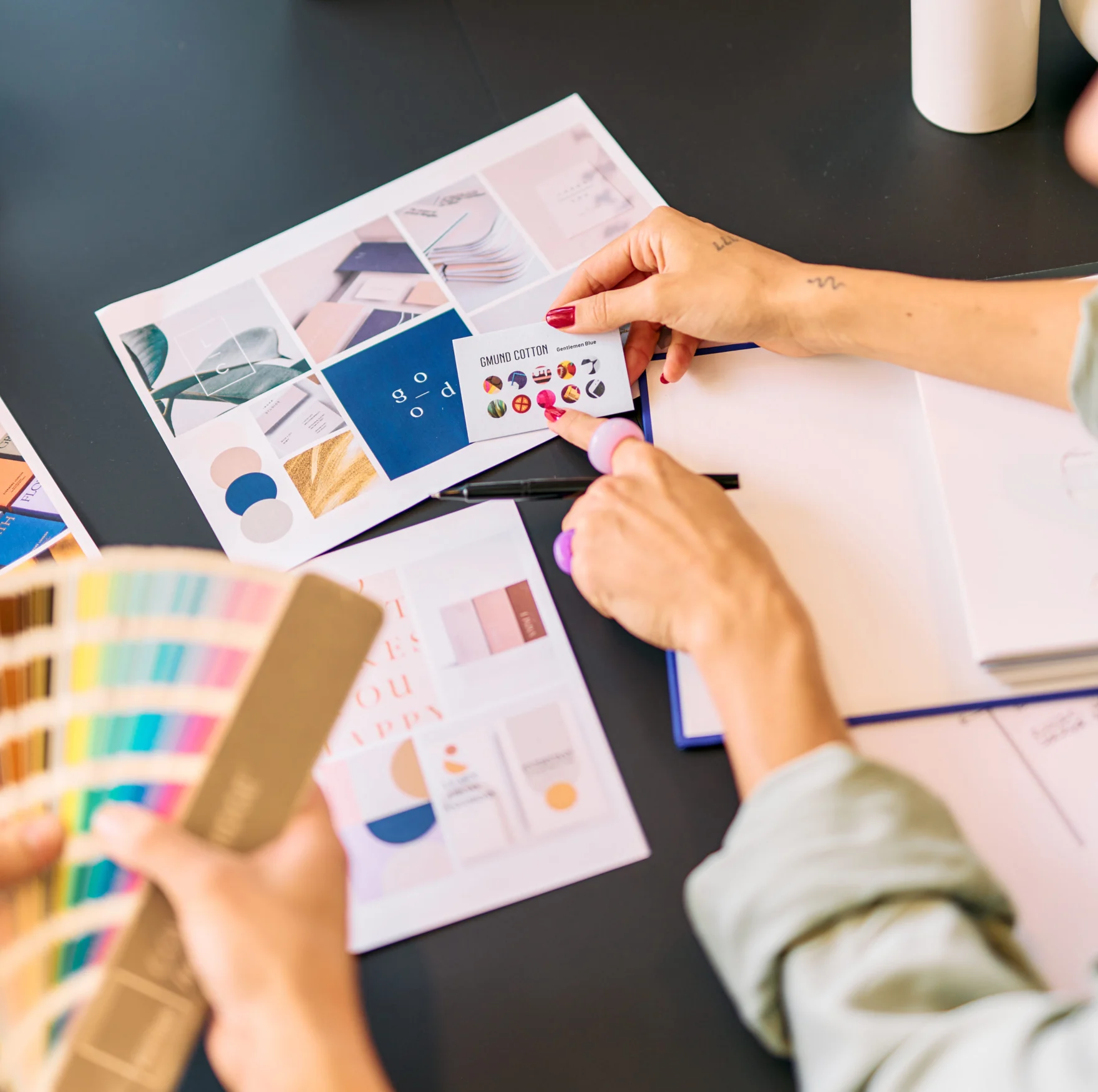
Good design starts with what needs to be said. Only then with how it should look.
For you that means: typography, colour, motion and imagery are used to say one thing clearly, in a way that doesn’t ask the reader to decode it. Decoration without function doesn’t make the cut, however well-intended.
The choices that stay are the ones that earn their place — each tied back to what the site is for, who it’s for, and what it has to make easier. Including for the technical reader who came for substance, not style.
Brand built into the structure
A brand grows stronger when it’s woven into the structure of a website, not pasted on top at the end.
In practice the opposite often happens: a colour pass, a font swap, a hero image — and the result feels fragile within a year. We start from the other side. We design with the existing brand system in hand, or rebuild it when it no longer fits who you’ve become.
Either way, the brand ends up in the grid, in the typography, in how images are framed, and in the tone of every button. Not as a layer on top, but as a thread running through everything.
Technology as a means, not a goal
Technology is changing faster than ever. WordPress, Webflow, headless CMS’s, AI-assisted development — the options are endless.
But we never start with the tech. We start with a question: what does this organisation need in order to succeed?
For most websites WordPress is still the best choice — flexible, easy to work with, with all the room to grow. For larger platforms we build custom solutions. For smaller projects we increasingly use AI-assisted development — faster to ship, lighter on budget, without giving up on quality or design.
For us, technology isn’t the goal. It’s a means to create a digital environment that works for the people using it after we hand it over — today, tomorrow, and the years after.
“A website doesn’t fail because it’s ugly.
It fails because no one decided what it should do.”
— Marsmedia
What working with us looks like
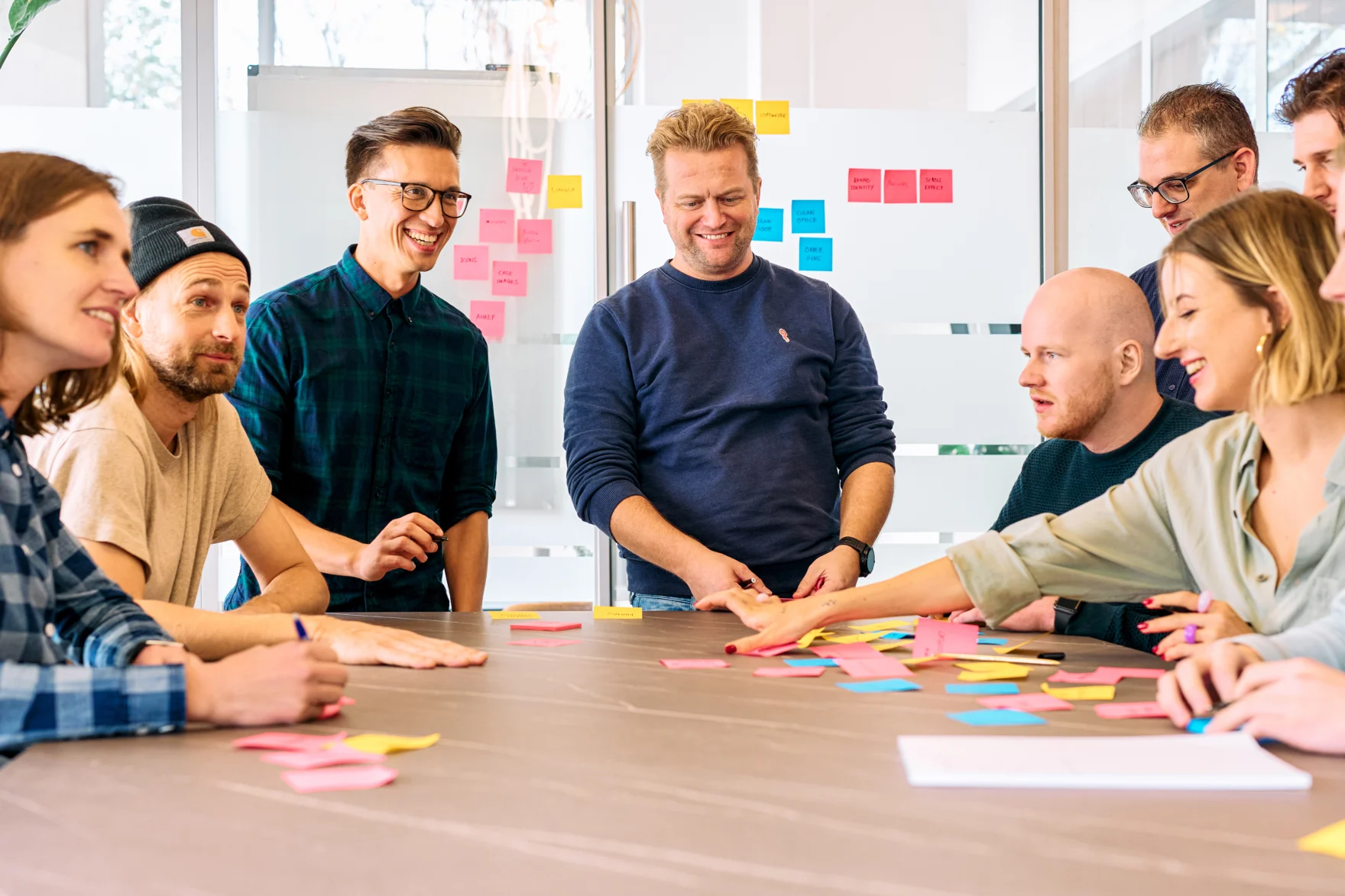
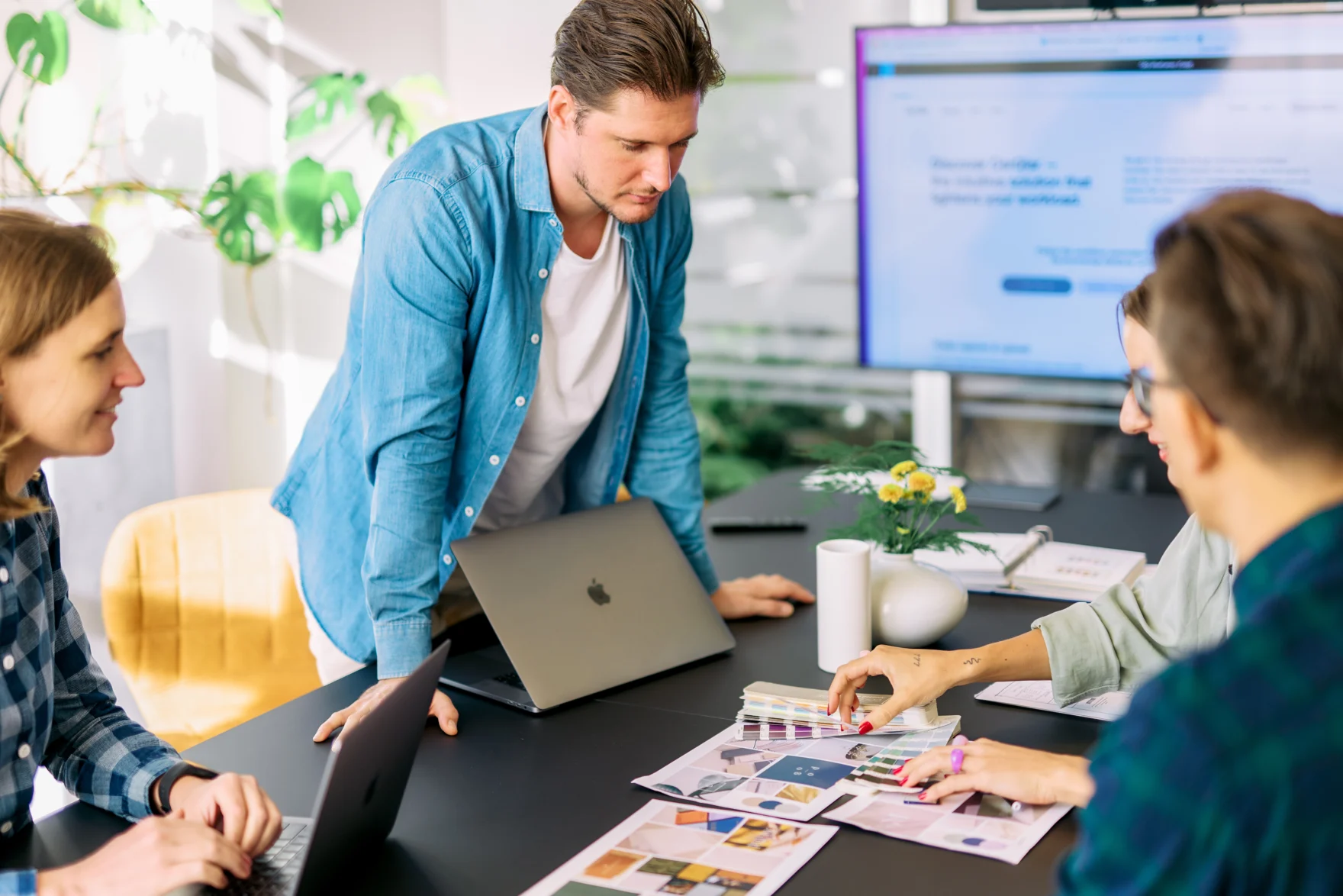
A brand or website isn’t created by passing work from one team to the next. That’s why strategists, designers and developers work together from the start. Your team is actively involved too, so insights, feedback and decisions land in the right place straight away.
What clients often tell us afterwards? That we pick up their world surprisingly quickly. Not just what they do, but where the real challenges lie, who they want to reach, and what makes them different. Because of that the brief gets sharper during the project, and the result lines up better with reality.
Trends come and go. A strong digital foundation stays.
That’s why we don’t just invest in the visual design, but especially in the structure underneath. Think content models, design systems and a logical information architecture. Those are the choices that keep a website working three or five years from now.
What you get is a platform that grows with new products, new campaigns, new audiences and new ambitions — without having to start over each time.
A website project is often a sizeable investment. When that’s the case, you want to know where you stand.
That’s why we work in clear phases — from strategy and structure to design, development and launch. For each step it’s clear what we deliver, what we need from each side, and how decisions get made.
That brings peace of mind. For the project team, and for the people internally responsible for planning, budget and progress. No surprises halfway through, just a process that stays overseeable from start to finish.
A good website attracts attention. A great website makes people understand why your organisation matters.
That’s why we look beyond design alone. We make sure story, structure, visuals and technology come together in one consistent experience.
The result is a website that doesn’t just look good, but actually helps build trust, makes complex ideas clear, and gets people moving.
“In web design Amsterdam, I enjoy strategically shaping elements to draw visitors’ attention and instill trust in their brand’s professionalism. It’s fulfilling to help clients effectively communicate their products or services through visually appealing and user-friendly designs.”
Nelson Eggermont
Lead of Design & UX
Let’s design a website that earns its place
How we work
Three steps. Everyone knows what is needed, and when.
We listen
Good work starts with good listening. Before we talk about structure, design or stack, we want to know what’s going on.
What is the organisation really doing? For whom? Where are the challenges? And what does the website need to unlock internally, so the project lands well in front of a board or investor?
Twenty years of working with innovation organisations helps us get to that quickly. In this first conversation, most briefs sharpen — and the decisions that follow become noticeably easier.
We simplify
Most websites carry the weight of old ideas. Pages built just in case, navigation that’s expanded over the years, headlines no one reads anymore.
We strip the structure back to what earns its place — for the technical reader and for the strategic one. Less navigation, fewer headlines, a clearer path through it all.
Making complex innovation easier to understand — that’s where twenty years of experience counts most. Usually it’s not about adding more, but adding less. And that’s the hardest part.
We see it through
A launch is the middle of the project for us, not the end.
In the first months after going live, we stay involved — measuring, making small adjustments, working through the questions that only surface once a real audience starts using the site. That’s where most of the value lands, and that’s where many agencies are already on to the next brief.
For the team that has to report internally on the investment, those first three months are where the real story gets written — not on launch day, but in the weeks that follow.
Connected services we offer
Brand
Website
Frequently asked questions
A web design agency translates what an organisation actually does into a website that supports it. Strategy, structure, visual design, content and the build itself — everything is connected.
The work sits closer to product design than to graphic design. Every choice is judged on one question: does this help the visitor decide?
For organisations whose value depends on others understanding their work, that’s the whole point.
A typical project runs ten to sixteen weeks from kick-off to launch. The exact timing depends on scope, the number of stakeholders, and the depth of the content work. Smaller refreshes can be done in six to eight weeks.
We plan the timeline in phases at the start of the project. So the team that has to defend it internally knows what gets delivered, and when, before the work begins.
A web designer usually handles design alone. A web design agency brings strategists, designers, developers, and content people to the same project — so design, build, and message line up.
For most of the work we do — especially in B2B web design, where multiple stakeholders read along — that coherence is the difference between a working site and just a good-looking one. A beautiful website makes an impression in the first presentation. A working website holds up in the actual conversation — with the prospect, the partner, and the board.
Both. Redesigns are often the more interesting work. Organisations that have become a different brand, organisations whose audience has shifted, or organisations whose website has accumulated old decisions no one can quite explain anymore.
We start by auditing what still works, what’s holding the site back, and rebuild from there. A complete rebuild isn’t always the right answer — when it isn’t, we say so.
Both. Most of our sites are designed and built by the same team, usually on WordPress, sometimes headless or on Webflow.
For smaller projects we increasingly use AI-assisted development — faster to ship, lighter on budget, with the same attention to quality. By keeping everything in one team, we avoid the gap where intent gets lost in handover — and you have one accountable contact internally for the whole project.
That depends on the scope, the depth of the content work, the integrations, and the number of stakeholders. Early in the conversation we share an estimate per phase, so you see what each part of the work costs before it begins.
For most organisations a web project is an investment they make every three to five years. We’d rather help you spend that money where it actually makes a difference than push for the most expensive version of the work.
Yes. We’re based in Amsterdam and many of our clients are Dutch, but our work is split across the Netherlands, the rest of Europe, and a smaller number of US and UK clients.
Remote collaboration is part of every project. On-site sessions happen when they add real value.
We work with organisations building what comes next — biotech, life sciences, medtech, healthcare, sustainable tech, knowledge platforms, AI-driven companies, and innovative SaaS.
The common thread isn’t the sector. It’s the challenge: making complex innovation easier to understand for the people who matter — investors, partners, customers, and talent.
Sector experience helps us pick up the field faster. The principles behind the work travel across all of them.
That’s something we help with as part of the work.
Most teams come to us at the moment they need to defend a budget to a CFO, a board, or an investor. We translate the project into outcomes those audiences recognise: lead quality, search visibility, time saved per sales conversation, signals to partners and investors.
The website itself becomes the visible part of that argument.
When we don’t believe we can add real value.
That can mean the budget is too small for the strategic work that needs to come with it. Or that the brief asks for a visual refresh on a structure that isn’t right yet. Or that the organisation itself hasn’t decided yet what it really stands for.
A client can only spend their budget once. If we wouldn’t be proud of the work three or four years from now, we say so — even when it costs us the offer.
Read more
Recent stories on web design, branding and innovation.