



























We make complex innovation easier to understand.
WordPress Development Agency in Amsterdam
Marsmedia has been building WordPress websites for twenty years — for biotech, life sciences, medtech, sustainable tech, SaaS and other organisations working on tomorrow’s world.
WordPress has a reputation problem it doesn’t deserve. Built well, it’s fast, secure and a pleasure for your team to work with. Built badly — stacked with plugins and themes on themes — it’s everything its critics say. The difference isn’t the platform. It’s the developer.
We build WordPress the first way: light, clean, and designed for the people who work with it after launch.
4.9 average on Google, 44+ reviews
Why WordPress still wins for most organisations
Not because it’s fashionable — it isn’t. Because after twenty years, it’s still the platform that serves the organisation instead of the other way around.
A website is handed over twice: once to you, and once to the people who update it every week. WordPress is the platform where that second handover works.
Editors can write, publish and restructure without a developer on standby. That sounds small; over the life of a website it’s the difference between a site that stays current and one that quietly goes stale.
WordPress runs a large share of the web, and that maturity works in your favour: a stable core, a security team that has seen everything, and an ecosystem where nearly every integration already exists.
Mature doesn’t mean standing still. Modern WordPress — block-based editing, headless options, proper development workflows — is a different platform from the one its reputation was built on.
WordPress is open source. Your content, your design and your data are yours — portable, exportable, and never held hostage by a licence fee that doubles next year.
For organisations that think in horizons of five years or more, that independence is worth more than any feature list.
Most of our clients start with a website and grow into more: a knowledge base, a careers section, a second language, a campaign platform. WordPress grows along without a rebuild.
That’s the quiet economics of the platform: the investment you make today keeps paying in year three and four, when adding something new is a week of work instead of a new project.
4.9 average on Google, 44+ reviews
What we build, specifically
WordPress development, from the ground up
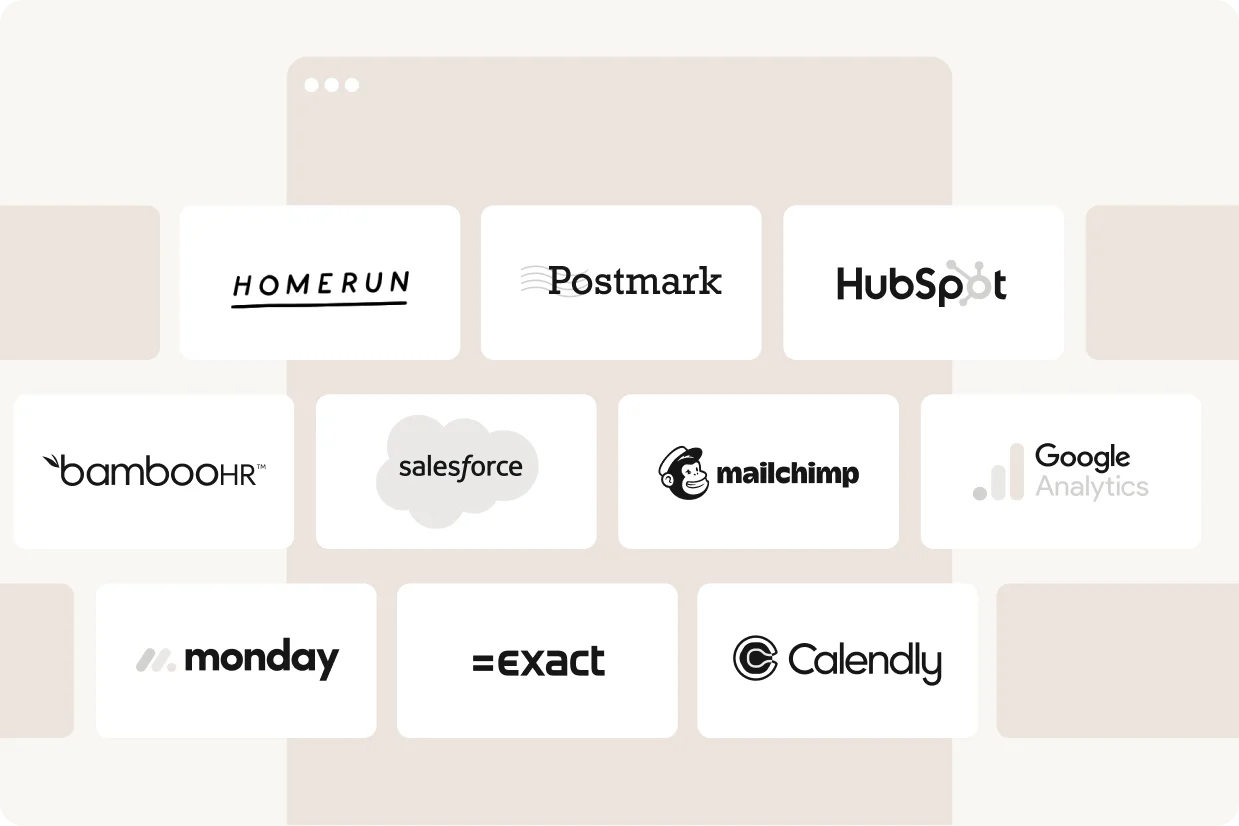
We build on our own theme, developed over years and now AI-powered: reusable blocks and modules that let your team build and edit pages freely — without being able to break the site. When we develop new modules, existing clients get them too. The plugins we do use earn their place: Yoast for SEO, hardened security, straightforward forms, and connectors for HubSpot, Salesforce or Pipedrive where your stack asks for it.
Our own Mars AI plugin takes care of the tedious parts of publishing — meta descriptions, image descriptions, heading structure — so your editors don’t have to. The result is a site that’s fast because there’s less of it, secure because the attack surface is small, and maintainable because a developer can read what’s there.
Headless WordPress
For larger platforms we build headless WordPress: the editorial comfort of WordPress as the content hub, with a modern front end delivering it to website, app or portal.
It’s the right choice for a specific kind of project — multiple channels, heavy performance demands — and unnecessary overhead for most single websites. We’ll tell you which one yours is.
Maintenance, security and hosting
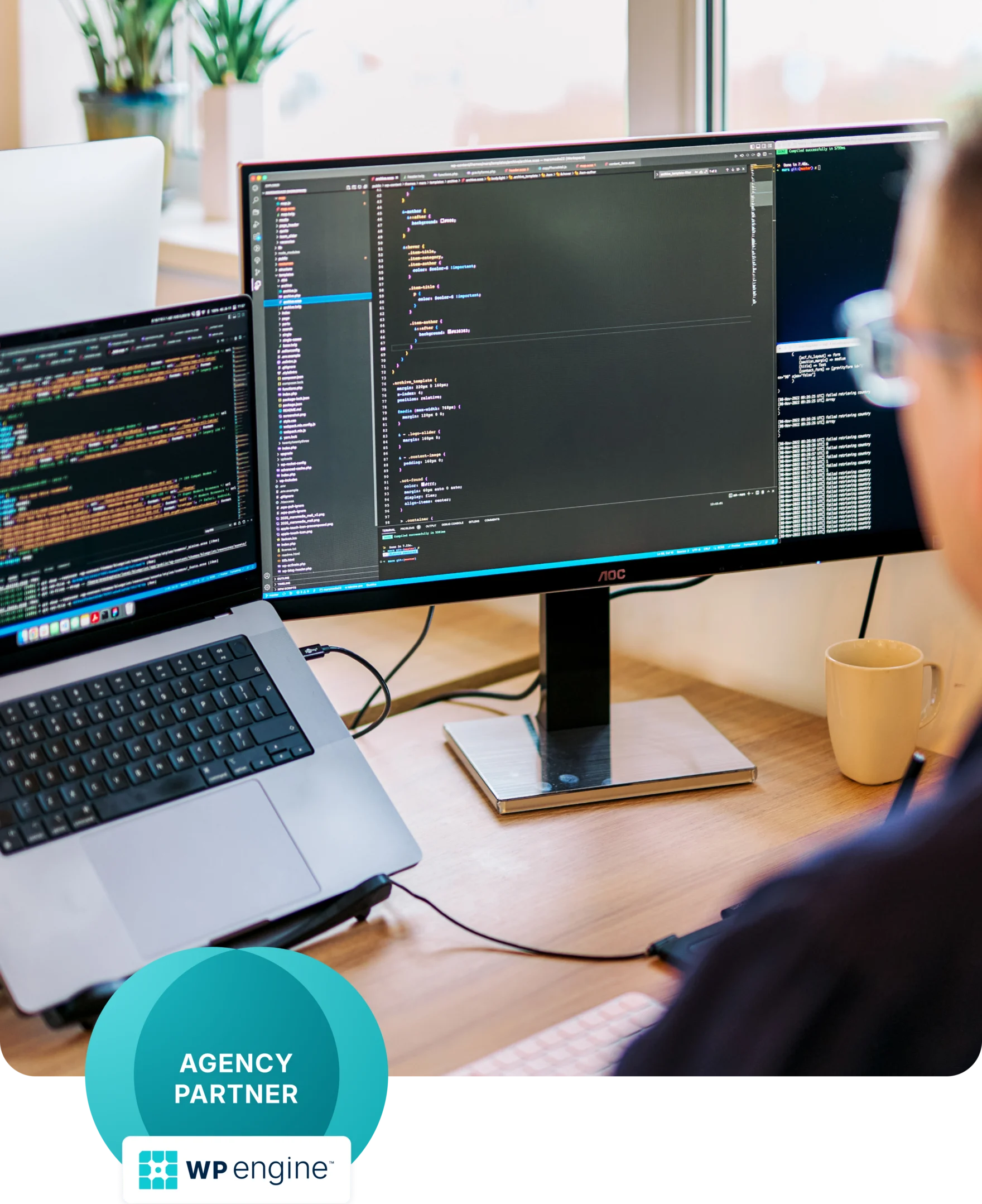
A WordPress site needs upkeep: core updates, plugin updates, security monitoring, backups. We handle WordPress maintenance for most of our clients — the team that built the site keeps it running, on WP Engine’s enterprise plan, the market leader in managed WordPress hosting. That’s what lets us guarantee both speed and security.
We agree the scope upfront, so you know what’s covered and what your team handles themselves. No surprises on the invoice, no update anxiety.
Migrations and rescues
A regular part of our work: taking over a WordPress site that’s been neglected or built badly. We start with a technical audit — what can stay, what can’t, and whether a rescue is cheaper than a rebuild. We’ve taken over sites with pages loading in two to three seconds; rebuilt on our foundation, with caching done properly, they load in milliseconds.
And when a project has genuinely outgrown WordPress, we say so. As a web development agency we build beyond the platform — the honest advice doesn’t stop at the edge of WordPress.
“WordPress isn’t slow. Badly built WordPress is slow.
The platform gets the blame; the build earns it.”
— Marsmedia
What working with us looks like
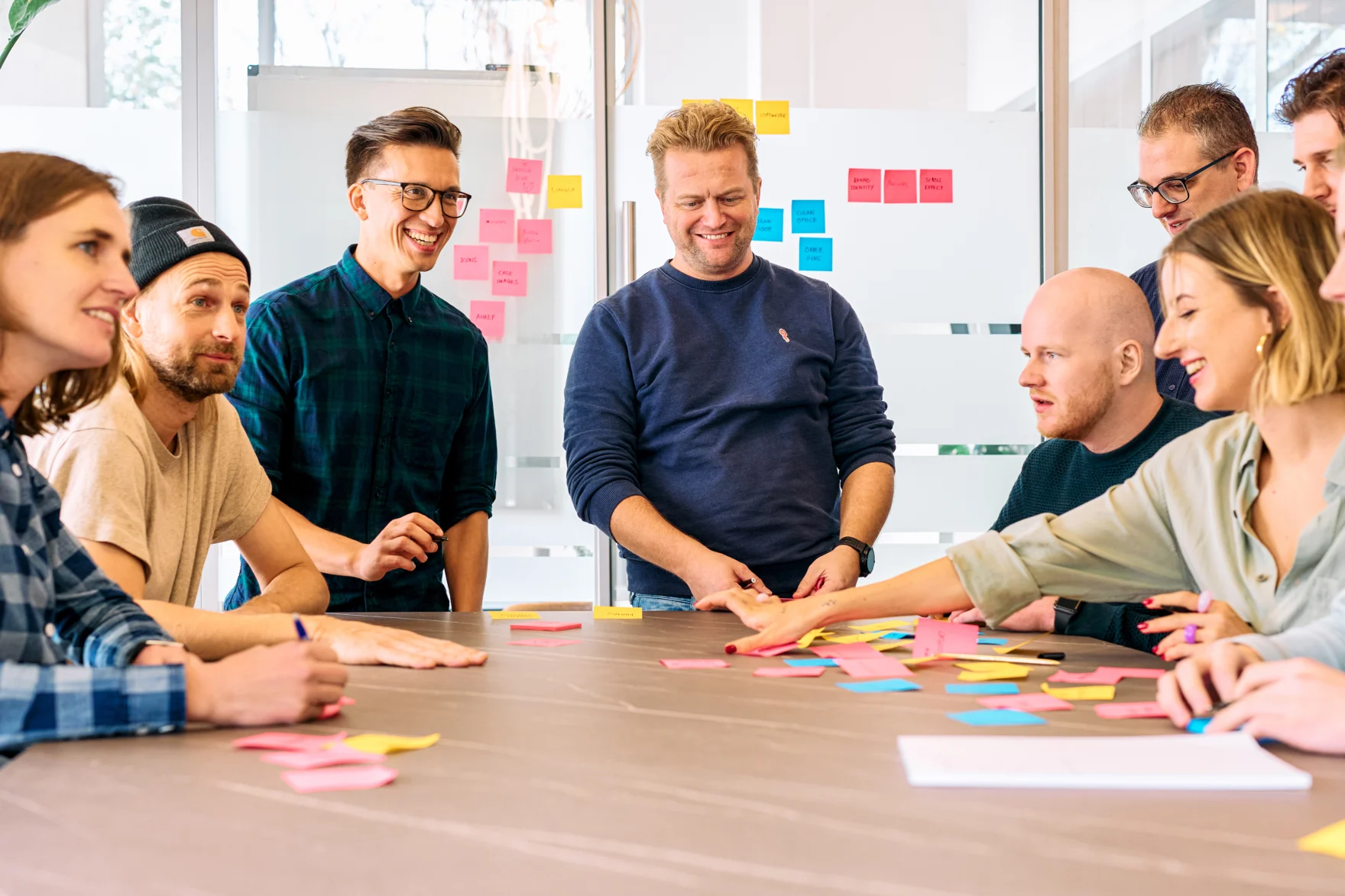
At a new enquiry we call first — simply to hear whether we’re a fit. Then comes a discovery session where the core question surfaces together: the founder at the table, a UX designer, and someone from brand where needed.
Across twenty years and more than 300 websites, that’s been the constant: the projects that succeed start with the right people at the table — on both sides.
The design decision we defend most often: not trying to say everything. The more a page says, the more likely the visitor decides on their own — and leaves without a conversation.
We look for the single most important thing per screen: just enough to convince, with a clear next step. Calm isn’t a style choice; it’s conversion work.
What we often find in sites built elsewhere: back to the builder for every small change, at a cost. Not with us — our own block system lets your team build and edit pages without being able to break the site.
And when we develop new modules, existing websites simply get them too.
A live website is our starting point, not the finish. We set up the measurement — behaviour, conversion, findability — and adjust based on what the data shows.
Ninety per cent of our clients stay after the first project. That’s no coincidence: the work gets better the longer we measure.
“I prefer to build custom WordPress development, it’s about crafting tailored solutions that ensure speed, security, and a unique digital presence. I do not believe in templates, it deserves the precision and care that custom development brings.”
Robin Wist
Web developer
Every project here starts with a call. Yours can too.
How we work
Three steps. Everyone knows what is needed, and when.
We call first
Every enquiry starts with a phone call: is this a fit, can we genuinely add value? If not, we point you to someone better placed. If so, we plan a discovery session — the joint brainstorm where the real question surfaces.
We simplify
Most briefs want to say too much. We look for the single most important thing per page and keep the design calm — just enough to convince, with a clear next step. That’s the hardest part of the craft, and exactly where twenty years count.
We measure until it works
A website is never finished. Launch is the starting point: we measure behaviour and conversion, adjust based on the data, and your team keeps building in our block system — without coming back for every small change.
Connected services we offer
Brand
Website
Frequently asked questions
A WordPress development agency designs, builds and maintains websites on WordPress — from the theme and the editorial setup to hosting, security and updates. The terms WordPress agency and WordPress development agency describe the same thing.
The useful distinction isn’t in the name but in the approach: does the agency build from the ground up, or assemble bought themes and plugins? The first gives you a site that’s fast and maintainable; the second gives you someone else’s technical debt with your logo on it.
Both, deliberately. We’ve built WordPress sites for twenty years — deep enough to call ourselves WordPress specialists — but WordPress is a choice we make per project, not a hammer that makes everything a nail.
That combination is worth something: a WordPress specialist who also builds beyond the platform can tell you honestly when WordPress is the right answer. A shop that only does WordPress can’t.
For a simple site with a standard theme, you can genuinely do it yourself — and we’ll say so. A WordPress developer earns their place when the site has to carry more: a custom design, real performance demands, integrations, or an editorial team that needs a setup that won’t fight them.
The honest test: if the website is a business card, build it yourself. If it has to convince investors, partners or talent, the build quality becomes part of the message.
That depends on the scope, the design work, the integrations and the editorial setup. Early in the conversation we share an estimate per phase, so you see what each part of the work costs before it begins.
For most organisations a website is an investment they make every three to five years. We’d rather help you spend that budget where it actually makes a difference than push for the most expensive version of the work.
The WordPress core is well maintained and patched quickly — most real-world problems come from elsewhere: outdated plugins, cheap themes, and sites that nobody updates.
That’s why our builds keep the plugin count low, avoid off-the-shelf themes entirely, and run on WP Engine’s enterprise hosting with a maintenance setup that keeps everything current. Built and maintained that way, WordPress is as secure as any platform we work with.
Headless WordPress separates the content from the presentation: editors keep the WordPress workflow they know, while a modern front end delivers the content to the website, an app, or both.
It shines for multi-channel platforms with heavy performance demands. For most single websites it’s unnecessary overhead — a well-built classic WordPress site is fast enough. If an agency proposes headless before understanding your project, ask why.
Core updates, plugin updates, security monitoring, backups, and a developer who knows your site when something needs fixing. We handle WordPress maintenance for most of the sites we build — the team that built it keeps it running.
We agree the scope upfront: what’s covered, what your team does themselves, and what counts as new work. No update anxiety, no surprises on the invoice.
Yes — it’s a regular part of our work. We start with a technical audit: how is the site built, where’s the technical debt, what can stay and what can’t.
Sometimes the honest conclusion is that a rebuild is cheaper than a rescue. We’ll tell you that before you spend money on the wrong one.
No. Page builders are quick to start with and expensive to live with: slow pages, locked-in content, and code no developer wants to inherit. In the audits we run on sites we take over, it’s the fault we find most often — alongside security nobody checked and redirects done badly.
We build with the native block editor on our own foundation. Your editors get the same visual freedom — your site keeps its speed, and your content stays portable.
When the project is really a product: complex application logic, real-time data, thousands of concurrent logged-in users. And at the other end: when all you need is a one-page presence that a site builder covers fine.
In between sits the large majority of organisation websites — and there WordPress, built well, is hard to beat. When your project falls outside that range, we’ll say so and build it the right way instead.
Three things make our work different.
One: design and development in one team. What you approve in the design is what goes live — the handover where most projects lose quality doesn’t exist here.
Two: we build from the ground up. Our own AI-powered theme, custom blocks, minimal plugins — sites that are fast on day one and still fast in year three.
Three: we build for the team that comes after launch. An editorial setup your people enjoy using, real documentation, and a partner who stays involved in the months where the real story gets written.
Volume isn’t our position. Depth is.
Read more
Recent stories on web design, branding and innovation.