The Hidden Costs of Poor Branding
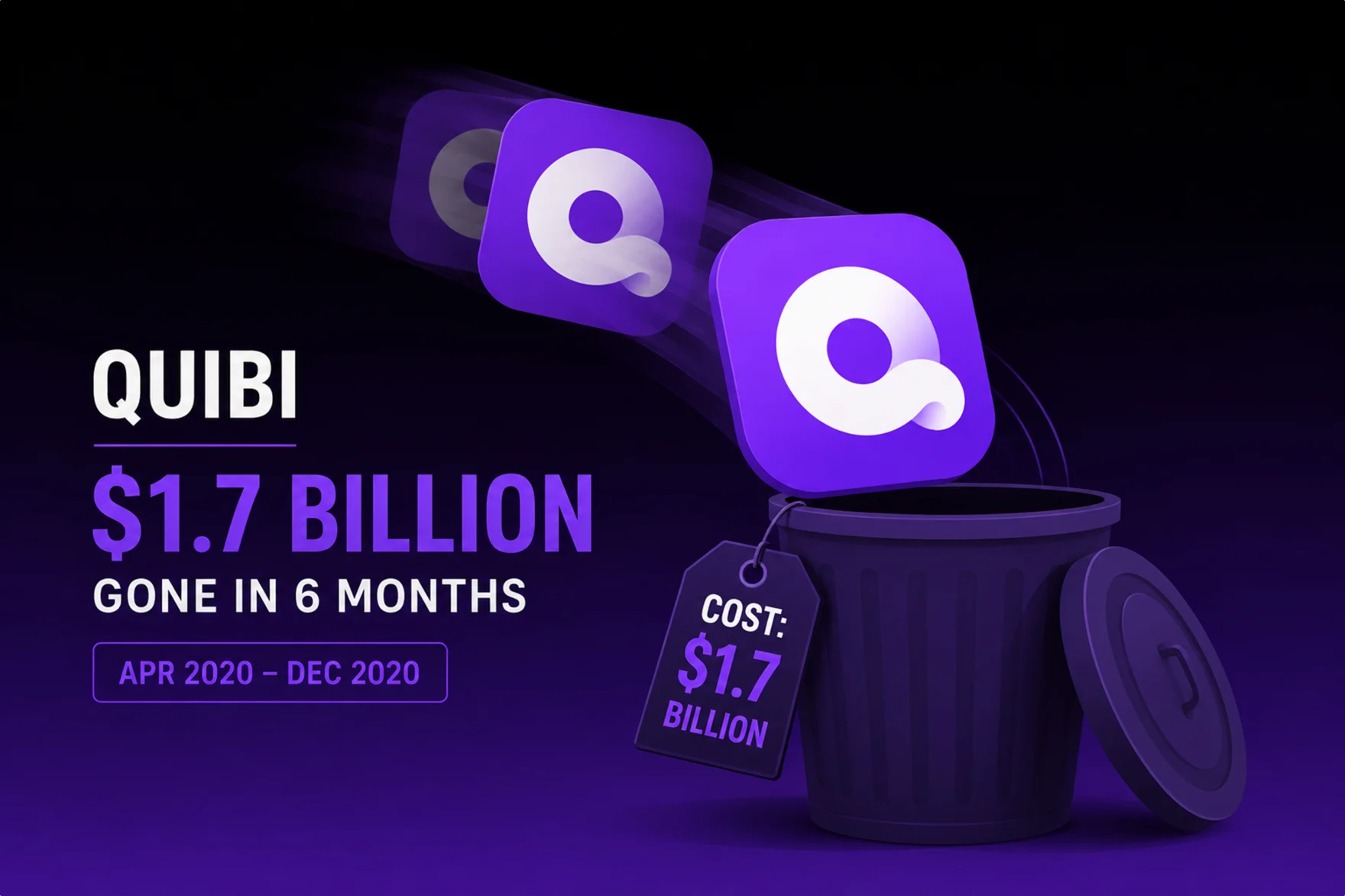
Despite $1.7 billion in funding, partnerships with Hollywood studios and a major marketing push, Quibi still flopped.
Quibi was a short-form streaming platform that launched in 2020.
Its proposition was simple: high-quality, professionally produced video content designed specifically for mobile, with episodes lasting under ten minutes.
It shut down just six months after launch.
Not because people didn’t hear about it, but because many never fully understood why it mattered to them.
At many of our biotech and innovation-driven clients, we see the same pattern: the story they tell the outside world doesn’t reflect the value they truly create.
Their digital presence — website, visuals, and copy — is often packed with detailed technical explanations of their innovation. It communicates expertise and pride, but leaves a crucial question unanswered: What’s in it for the reader?
Why should top talent or academic partners want to work with you? Why should an investor fund your project? Why should anyone care about your products or services?
Technical explanations alone rarely create connection. They explain what you’re doing, but not why it matters.
The opportunities you’re losing
The consequences are often bigger than companies realize.
First, you’re paying more for the same reach. When your positioning is unclear, every campaign has to spend time explaining who you are before it can communicate value.
Second, you’re likely charging less than you’re worth. Pricing power is closely tied to brand trust. If your positioning isn’t clear, you risk competing on price, even when your product is genuinely differentiated.
Third, you’re losing opportunities you never even knew existed. A potential investor, partner, or candidate searches for your company, visits your website, and quietly moves on. There is no rejection email. No difficult conversation.
Why companies notice too late
Because these costs don’t appear on a balance sheet, they often remain invisible for years.
We frequently see companies confront the issue when they’re preparing for a funding round or launching a major marketing campaign. Suddenly, the fundamental questions become unavoidable: Does our story come across clearly? Do we look professional? Will investors, partners, and talent understand our value?
Those are important questions. The challenge is that they’re often asked too late.
By that point, you’re already investing in a pitch deck, a campaign, or a growth strategy on an unstable foundation. You’re investing in visibility before you’ve built trust.
Branding should start earlier than you think
Many companies treat branding as a final step — something to address later, once the product, technology, or business has matured.
We believe the opposite.
Branding should start early and evolve alongside your company. Every stage deserves attention and budget.
The difficulty is that branding requires distance. You see your company from the inside. You know the technology, the mission, and every decision that led you here. To you, your website may feel like a clear showcase of innovation. To an outsider, it may not.
That’s why an external perspective can be so valuable. Someone who helps ask the questions that matter before they become urgent: Does our audience understand what we do? Do they understand why it matters?
Because effective branding isn’t design first. It’s strategy first.
And that makes all the difference.