



















We make complex innovation easier to understand.
Web Agency in Amsterdam
Marsmedia is an Amsterdam-based web agency working with organisations that build complex innovation. For twenty years our senior strategists, designers, developers and content people have worked from one place — on websites for biotech, life sciences, medtech, sustainable tech, SaaS and other organisations on tomorrow’s frontier.
Our clients sit across the Netherlands and well beyond. From Amsterdam and Ghent to Los Angeles, New York, Chicago, and Cape Town. Close enough to sit beside you when it helps, international enough to scale with you when growth asks.
4.9 average on Google, 44+ reviews
Why work with an agency
What we often find at innovation organisations: the knowledge lives everywhere in the company, but no shared version of the story exists. Every team tells it slightly differently. A good agency is where that story — and the website around it — comes together in one hand.
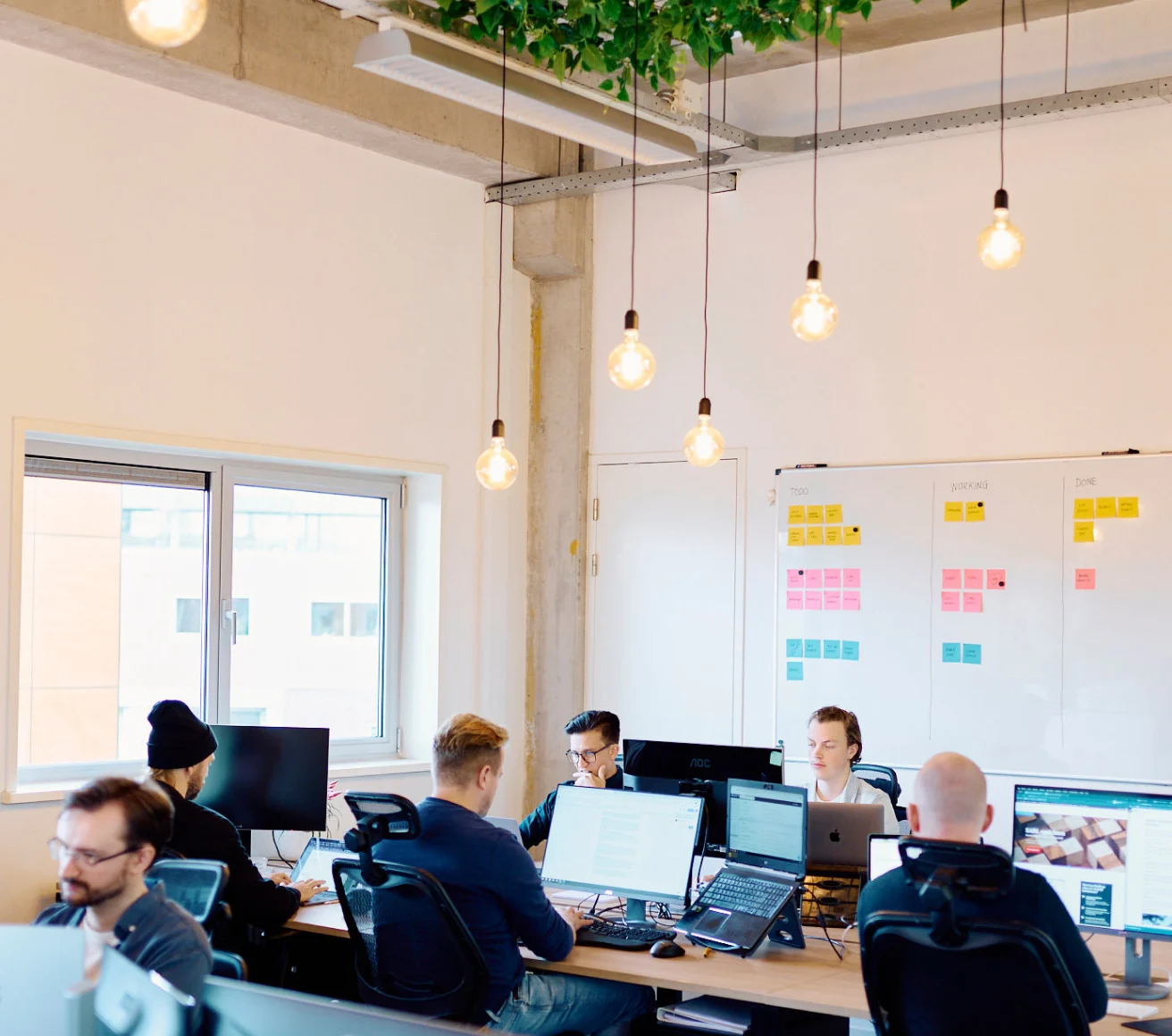
A good agency isn’t a collection of separate specialists. With us, strategists, designers and developers work together from the first conversation. If a topic asks for specific expertise, we bring those people in for the very first meeting — so technical and substantive points surface immediately, not later.
For you, that means: one point of contact, one timeline, one place where decisions get made. And as the work progresses, the brief sharpens, not blurs.
The work runs through people who have been doing this for fifteen to twenty years. Not because junior talent has no place — but because the organisations we work with are full of very smart people. An innovation organisation has strategists, scientists, engineers — people who know the substance deeply. You want someone alongside them who can match that level, not someone still learning the craft.
A strong senior picks up the field faster, spots the pitfalls others meet later, can match the stakeholders you have to convince internally, and can defend the decisions that come up at a board or in front of an investor. In practice, that means sharper briefs sooner and fewer surprises halfway through.
We work most often with organisations building tomorrow’s world — biotech, life sciences, medtech, sustainable tech, knowledge platforms, AI-driven SaaS, and the innovations beyond. That’s where our heart is, and where our experience runs deepest.
That kind of work needs an agency that knows both the craft and the context. Picking up the substance quickly isn’t an extra service — it’s a precondition for working with complex organisations in a meaningful way.
From Amsterdam we work as a creative digital agency with organisations across seven countries — the Netherlands, Belgium, the UK, Germany, the US, China, and South Africa. For some projects we sit at the same table. For others we run alongside through shared Slack and biweekly calls.
The process has been refined over twenty years, so scale and time zones aren’t a problem. An internationally operating organisation gets the same result from us as an Amsterdam scale-up does.
4.9 average on Google, 44+ reviews
What we do, specifically
Strategy and positioning
Before structure or design, we make sure it’s clear what you want to say — and to whom. What is the organisation doing, for whom, and why does it matter? What’s the current communication setup, and what isn’t right yet?
Only when the direction is clear do we start with form. That saves most projects from the two irreversible decisions that later cause the most pain.
Web design and UX
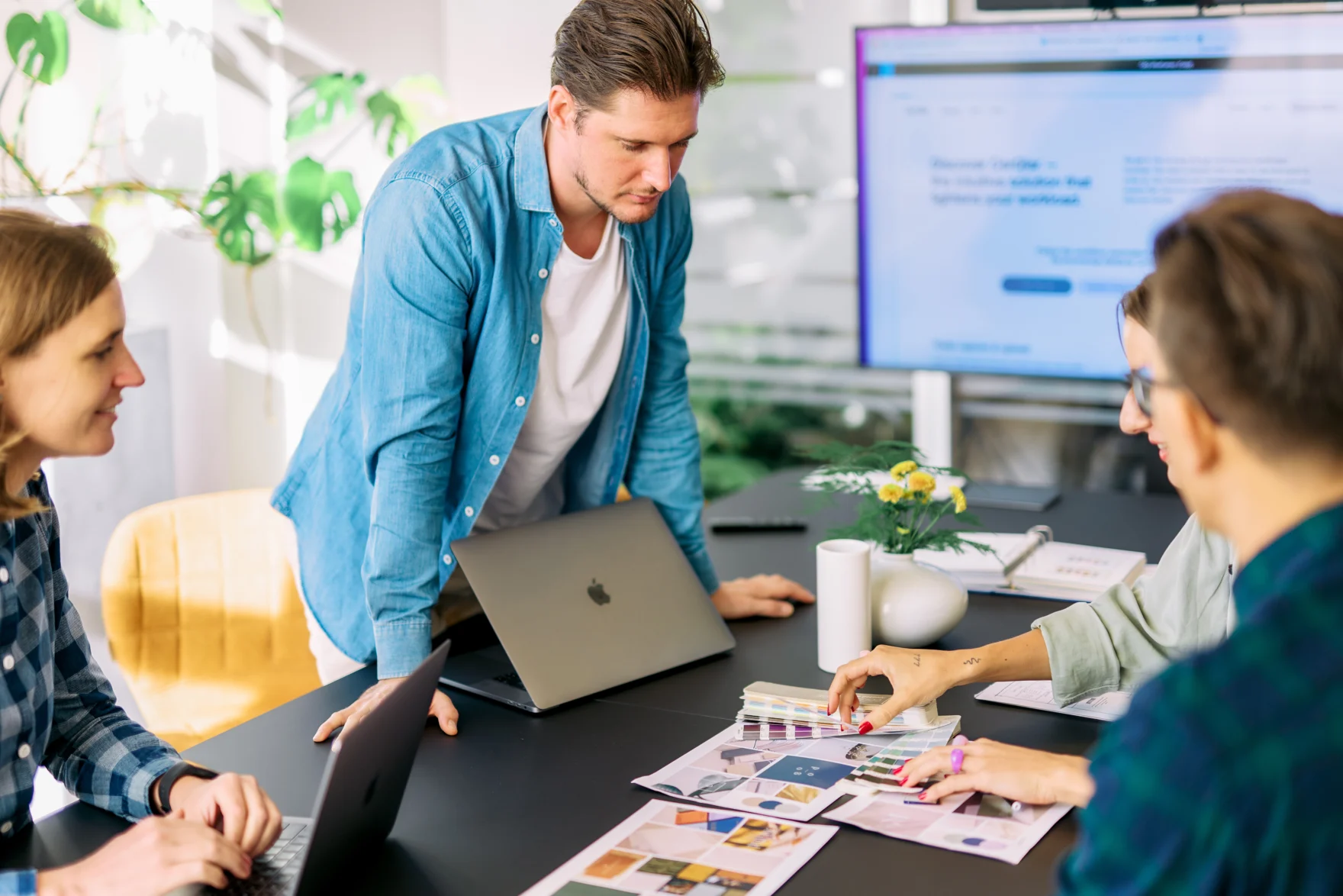
With us, designers make visual work that’s strategically grounded. Typography, colour, hierarchy and motion are used to land the message clearly — in a way the reader doesn’t have to decode.
Beautiful design isn’t an end in itself for us, but a result. A design that works for the whole readership around a project — engineer, marketing manager, board — is beautiful because it works, not the other way around.
Development and build
Our websites are designed and built by the same team, usually on WordPress, occasionally headless or on Webflow. For larger platforms we develop custom solutions. For smaller projects we increasingly use AI-assisted development — faster to ship, lighter on budget, with the same attention to quality.
By keeping everything in one team, we avoid the gap where intent gets lost in handover.
Content, SEO and growth
A website only works when the right people find it. That’s why content and SEO aren’t a separate track but part of the main work. We write the copy with you, structure the information so both Google and the reader follow it, and make sure the site keeps improving after launch.
Increasingly, we write with AI-search in mind too. More people search not just in Google but in ChatGPT, Claude and other AI assistants. Content that gets picked up there has to be clear, structured and factually correct — that’s something we account for explicitly.
For most clients, that means: three months after launch the site is not just live, but also sharper and more findable than on day one — in search engines and in AI results.
“A good agency isn’t a collection of specialists.
It’s the place where the decisions come together.”
— Marsmedia
What working with us looks like
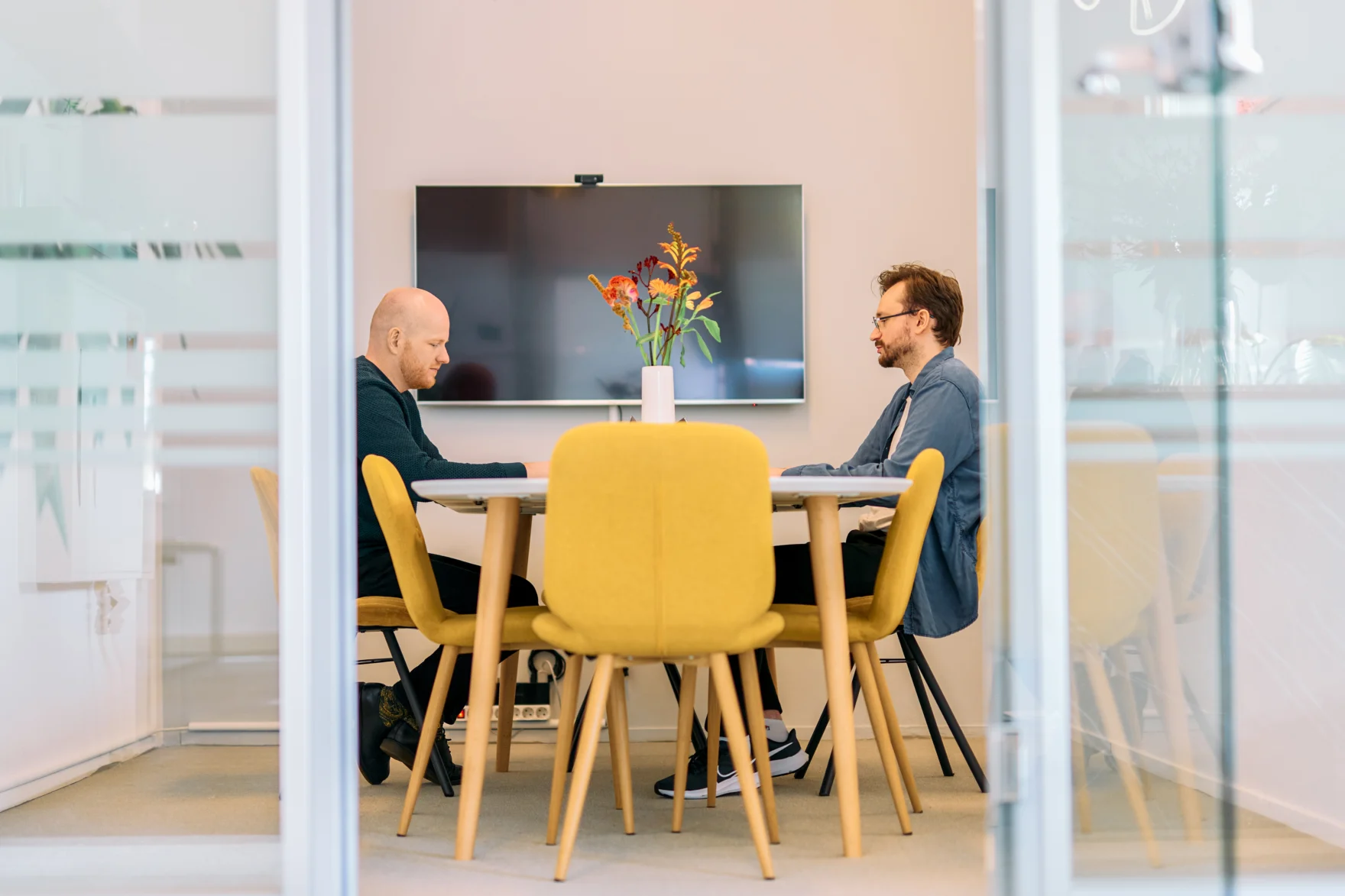
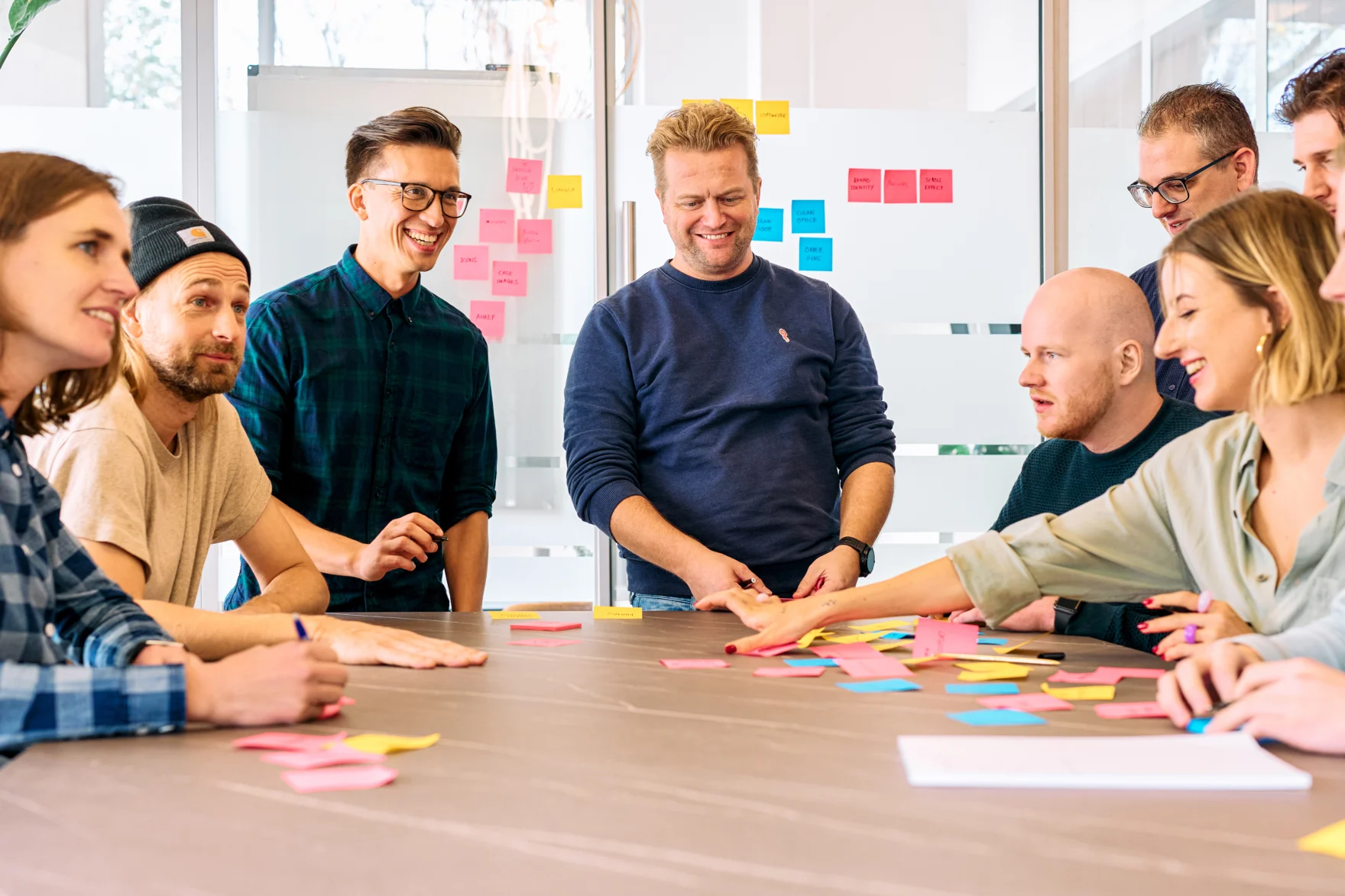
At a new enquiry we call first — simply to hear whether we’re a fit. Then comes a discovery session where the core question surfaces together: the founder at the table, a UX designer, and someone from brand where needed.
Across twenty years and more than 300 websites, that’s been the constant: the projects that succeed start with the right people at the table — on both sides.
The design decision we defend most often: not trying to say everything. The more a page says, the more likely the visitor decides on their own — and leaves without a conversation.
We look for the single most important thing per screen: just enough to convince, with a clear next step. Calm isn’t a style choice; it’s conversion work.
What we often find in sites built elsewhere: back to the builder for every small change, at a cost. Not with us — our own block system lets your team build and edit pages without being able to break the site.
And when we develop new modules, existing clients simply get them too.
A live website is our starting point, not the finish. We set up the measurement — behaviour, conversion, findability — and adjust based on what the data shows.
Ninety per cent of our clients stay after the first project. That’s no coincidence: the work gets better the longer we measure.
“In web design Amsterdam, I enjoy strategically shaping elements to draw visitors’ attention and instill trust in their brand’s professionalism. It’s fulfilling to help clients effectively communicate their products or services through visually appealing and user-friendly designs.”
Nelson Eggermont
Lead of Design & UX
Every project here starts with a call. Yours can too.
How we work
Three steps. Everyone knows what is needed, and when.
We call first
Every enquiry starts with a phone call: is this a fit, can we genuinely add value? If not, we point you to someone better placed. If so, we plan a discovery session — the joint brainstorm where the real question surfaces.
We simplify
Most briefs want to say too much. We look for the single most important thing per page and keep the design calm — just enough to convince, with a clear next step. That’s the hardest part of the craft, and exactly where twenty years count.
We measure until it works
A website is never finished. Launch is the starting point: we measure behaviour and conversion, adjust based on the data, and your team keeps building in our block system — without coming back for every small change.
Discover the right services for your needs
Brand
Website
Frequently asked questions
A freelancer usually handles one role — design, or development, or strategy. A web agency brings those roles into one project, under one timeline, with one accountable contact.
For small, focused projects a freelancer can work fine. For projects where strategy, design, build and content have to inform each other, an agency is more efficient — fewer handovers, less noise, and one place where the decisions get made.
The deeper benefit sits underneath: an agency reduces the risk that you invest in something that ultimately doesn’t work. A freelancer delivers what was agreed; an agency thinks alongside you about whether what was agreed is the right answer in the first place. For projects where you don’t want to start over later, that’s the difference that counts.
We’re a deliberately compact team of twelve — strategists, designers, developers and content people, 80 to 90 per cent senior. That keeps the lines of communication short and means a senior is always directly involved in your project.
For specific needs we also work with trusted freelancers we’ve known for years. A copywriter who can hit the right tone for a complex biotech topic. A CRO specialist with deep experience in a particular area. People we bring in when a project benefits from focused expertise.
Marsmedia has been working for more than twenty years. Across that time we’ve built more than 300 websites — from Amsterdam scale-ups to international partners in the US, China and South Africa. Some client relationships run past ten years.
That experience doesn’t just live in the projects that went well. It also lives in the projects we’ve had to rebuild after other agencies, which is what shows us which decisions hold up over time and which don’t.
We work primarily with knowledge-intensive organisations building tomorrow’s world — biotech, life sciences, medtech, healthcare, sustainable tech, knowledge platforms, AI-driven companies, and innovative SaaS.
The common thread isn’t the sector. It’s the challenge: organisations rich in expertise but struggling to communicate it clearly — to investors, partners, customers, and talent.
We’re based in Amsterdam, but the work travels further. Our clients are spread across seven countries: the Netherlands, Belgium, the UK, Germany, the US, China, and South Africa.
For some projects we sit at the same table. For others we run alongside through shared Slack and biweekly calls. The process is set up so that scale and time zones don’t get in the way of the quality of the work.
That depends on the scope, the depth of the content work, the integrations, and the number of stakeholders. Early in the conversation we share an estimate per phase, so you see what each part of the work costs before it begins.
For most organisations a web project is an investment they make every three to five years. We’d rather help you spend that money where it actually makes a difference than push for the most expensive version of the work.
For design we mostly work with Figma. For the build, WordPress is the right choice for most projects — flexible, easy to work with, with all the room to grow. Even more complex projects we often run on WordPress; only when it’s really needed do we go headless or custom. For smaller projects we increasingly use AI-assisted development.
For project management we use monday.com. Timeline, deliverables and decisions live there — for our team and for yours.
The stack is always secondary to the project. We choose what works best for your team after handover, not what sounds most modern in a deck.
With a shared Slack workspace, a biweekly call, and clear agreements about when which decisions are made. Our project manager schedules those calls for the full project upfront, so everyone knows when they are — including when a client’s team is split across the US, the UK and China at the same time.
That’s part of what makes this work enjoyable: the whole world working on the same project, morning for one, eleven at night for another. On-site sessions happen when they add real value — for positioning work, a design review, or a launch week.
The honest way is a conversation — we always call first. We talk about what you’re trying to do, where you stand now, and what questions are open internally. After that we both know if a collaboration makes sense.
Sometimes it turns out a redesign isn’t the right next step. Or that a different agency might fit your needs better. We’ll say either honestly — a good collaboration begins with a sober assessment, not with a sales pitch.
And some things we deliberately don’t do: high-volume B2C, dropshipping, quick commerce. We work for companies that genuinely matter — that’s where our heart is, and what our work is built for.
Three things make our work different.
One: we work consistently with senior teams who’ve been in this for fifteen to twenty years. For you that means: fewer questions upfront, faster to the core, and no junior learning their trade on your project.
Two: we start with what you want to say, not with how it should look. Most of the sites we rebuild were designed before the direction was clear — we start from the other side.
Three: twenty years of working with knowledge-intensive organisations. We make complex innovation easier to understand for the entire group of readers around a company — and we can defend every decision in front of the people you have to convince internally.
Volume isn’t our position. Depth is.
The terms overlap more than they differ, and plenty of agencies use them interchangeably. In practice: a digital agency tends to cover the full digital spectrum — campaigns, media, social, sometimes apps — while a web agency puts the website at the centre of the work.
We call ourselves a web agency because that’s where our work starts: the website as the place where strategy, story and technology come together. Around it sit the disciplines that make a digital web agency complete — brand, content, SEO and growth — but always in service of that centre, not as loose ends.
If you’re comparing agencies, the label matters less than the question behind it: does this agency understand what your website needs to achieve, and can they carry it from strategy to build without handing it over halfway?
Read more
Recent stories on web design, branding and innovation.