

















We make complex innovation easier to understand.
Graphic design agency in Amsterdam
Good design doesn’t start with how something looks. It starts with what needs to be said. Marsmedia is a graphic design agency in Amsterdam that has worked that way for twenty years — for biotech, life sciences, medtech, sustainable tech, SaaS and other organisations working on tomorrow’s world.
From visual identity to website and campaign: strategists, designers and developers work from one studio on design that tells the same story on every channel. More than three hundred brands and websites later, it still works that way.
Some clients walk into our studio in the Houthavens. Others work with us from Ghent, London, Los Angeles or Cape Town. The design doesn’t change either way.
4.9 average on Google, 44+ reviews
What good graphic design does
For an organisation built on complex innovation, design is rarely decoration. It’s the shortest route between what you do and what a reader understands — and that’s exactly where we most often see it go wrong.
What we often discover: the story exists, but nowhere on paper. The founder tells it perfectly in conversation — yet the moment it has to be designed, no shared version exists, and every design decision becomes a guess.
That’s why we don’t start with a moodboard, but with the question: what does your organisation do, for whom, and why does it matter? Only then come form, colour and typography — and every choice can be explained to a colleague, a board or an investor.
A brand isn’t carried by one logo, but by everything around it. The grid, the typography, the way images are framed, the tone of every heading and every button.
That’s why we don’t design piece by piece, but from one visual system. What you see on the website matches the deck you send a partner — and the campaign that follows.
Around an innovation organisation, everyone reads the same design differently. The engineer looks for substance, the marketing manager for the story, the board for something to hold on to.
Good graphic design makes sure each of them finds their part, without the whole falling apart. Hierarchy, structure and imagery do that work — not as styling, but as a reading guide.
We design from Amsterdam, for clients in seven countries — from the Netherlands and Belgium to the UK, Germany, the US, China and South Africa. For some projects we sit at your table; for others we work through a shared Slack and biweekly calls.
Twenty years shaped a process where distance plays no role in the quality of the design.
4.9 average on Google, 44+ reviews
From identity to campaign: what we design
Brand strategy and positioning
Every design project starts with the story. What is the organisation doing, for whom, and what isn’t right yet in the current communication? We answer those questions together, before anything gets designed.
It looks like a detour, but it’s the shortest route. The most expensive design mistakes happen when form comes before direction.
Visual identity and brand guidelines
We design visual identities that go beyond a logo and a colour palette: typography, imagery, grid and tone, documented in brand guidelines your team can actually work with — communication framework included, so the direction behind the design never gets lost.
What a full identity project includes, and what it costs, is on our page about visual identity design.
Graphic design for digital
Most of our design work lives on screens: websites, campaigns, presentations, social, and the design systems underneath. Where print is needed — a report, conference materials, an annual review — we design it in the same visual language.
One story, recognisable on every format it lands on.
From design to application
A design is only finished when it works in practice. That’s why the same people design and build here: what you see in the design is what goes live — on the website, in the CMS, in the templates your team uses.
By keeping design and execution in one hand, nothing gets lost along the way.
“A brand isn’t built with one logo.
It’s built with every choice after it.”
— Marsmedia
What working with us looks like
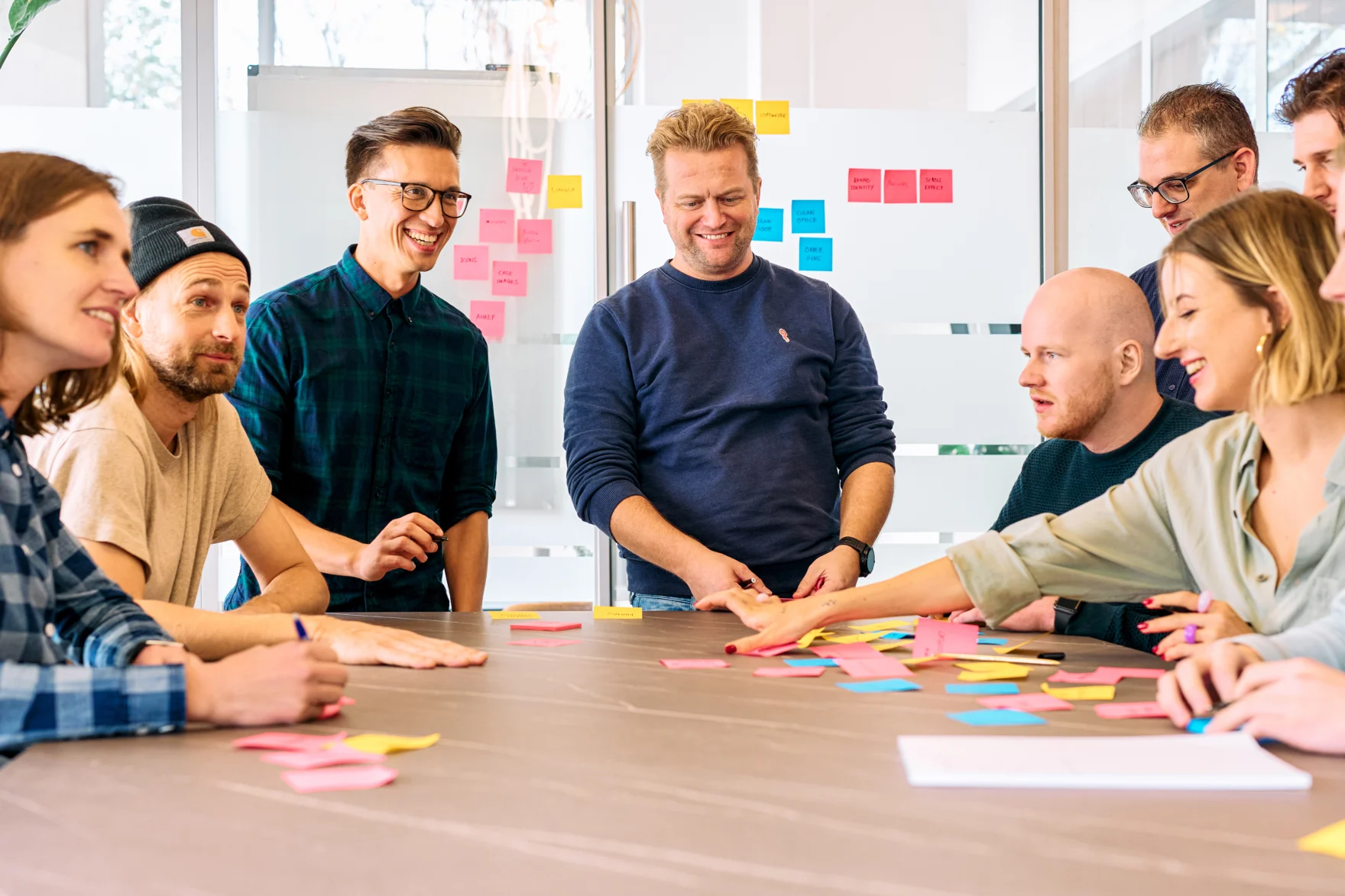
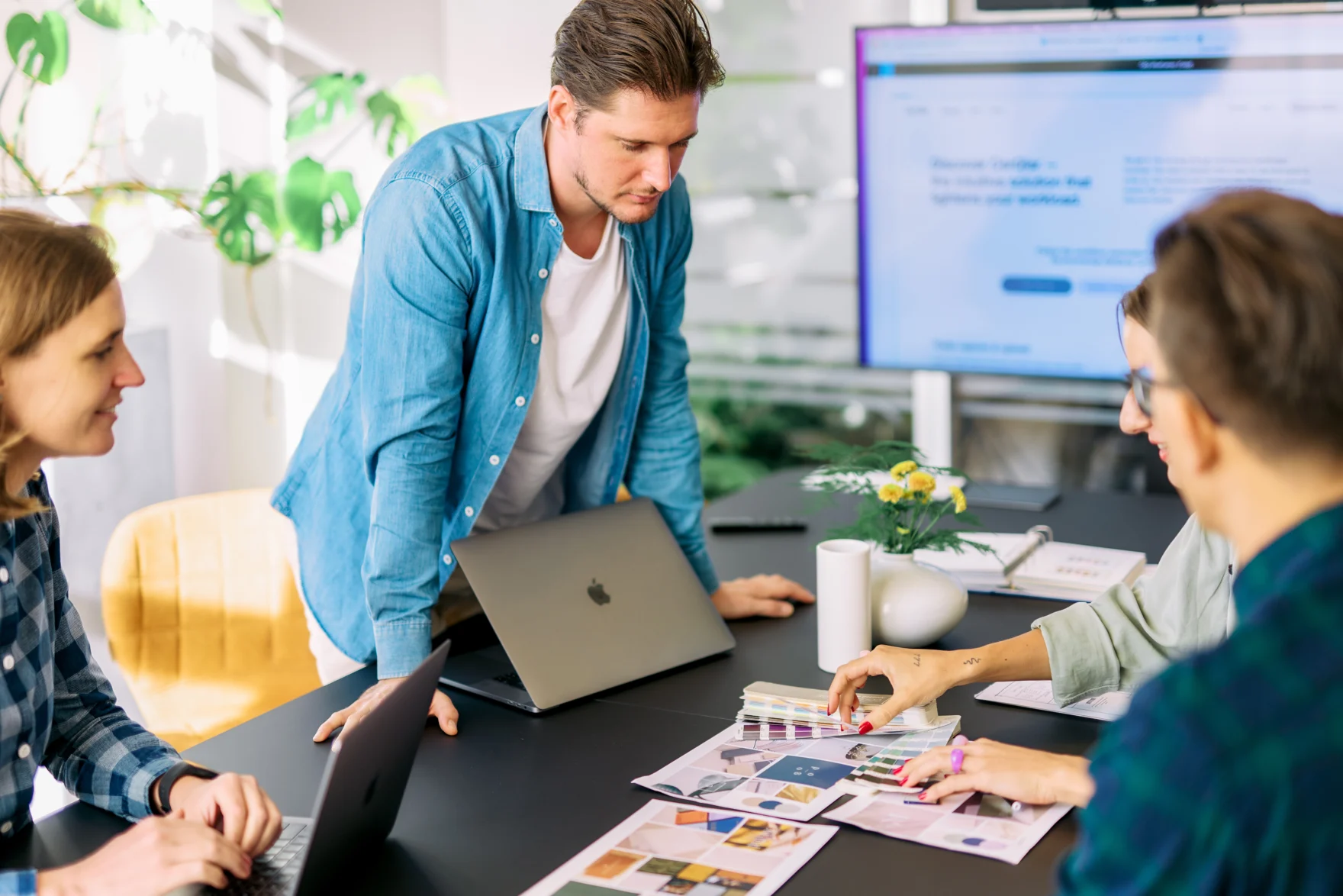
Two to three hours, your core team and ours at one table — founder included, UX and brand included. Everything said there gets clustered into the communication framework: values, goals, convictions.
That foundation never gets lost again — it lives, literally, in the brand guidelines.
We’ve seen too many eighty-page brand strategies nobody reads. Our deliverable is deliberately compact: the essence on one page, the depth behind it, and a presentation that makes it land internally.
A strategy only works when everyone can retell it.
Not every brand needs a restart. Sometimes a refresh is more honest than a rebrand — because throwing away fifteen years of built-up recognition has a price nobody names upfront.
We’ve advised clients against a full rebrand and given them a stronger refresh instead. We’d rather have that conversation before the project than after.
The brand comes to life on the website, in the templates, down to event materials — applied by the team that designed it.
What clients tell us afterwards: “we finally understand who we are ourselves” — and that sales and marketing can work with it from day one.
“In web design Amsterdam, I enjoy strategically shaping elements to draw visitors’ attention and instill trust in their brand’s professionalism. It’s fulfilling to help clients effectively communicate their products or services through visually appealing and user-friendly designs.”
Nelson Eggermont
Lead of Design & UX
Curious what our kickoff would surface about your brand?
How we work
First the foundation, then the building. Everyone knows what is needed, and when.
The kickoff
Two to three hours with both core teams at one table — founder included, your specialists where needed. Everything said gets organised through the Mars Methodology (Project Foundation → Deep Dive → Communication Framework) into the communication foundation, in two to three weeks.
That sets the direction. And then the real work begins.
From foundation to concepts
We translate the foundation into a small number of directions and choose together. Every design decision after that traces back to something you said — which makes it defensible, internally too, in front of a board or investor.
We apply until it lives
Website, templates, presentations, event materials — by the same team, no handover. And in the first months we watch how the brand performs in real use: a brand is never finished on delivery day.
Connected services we offer
Brand
Website
Frequently asked questions
A graphic design agency translates what an organisation does into visual form: identity, typography, structure and imagery that together tell one story. At ours, application is part of the work — from website to presentation and campaign.
The work sits closer to communication than to decoration. Every design decision is judged on one question: does this help the reader understand what you stand for?
For organisations whose value depends on whether others understand their work, that’s the whole point.
A graphic designer usually handles the design alone. A design agency brings strategists, designers, developers and content people together on one project — so story, form and execution stay on one line.
For a single deliverable, a freelancer can work fine. For work where identity, website and communication have to interlock, an agency is more efficient: fewer handovers, less noise, and one place where the decisions get made.
Yes. Logo design, visual identity and brand guidelines are a core part of our work. Usually not as a standalone product, but as part of a broader project that carries through to the website and communication.
A logo on its own changes little. What makes the difference is the system around it: the typography, the imagery, the tone — and whether that system is applied consistently on every channel where your organisation shows up.
Most of our work is digital: websites, campaigns, presentations, social. Where print plays a role — a report, conference materials, an annual review — we design it in the same visual language.
The principle stays the same: one story, recognisable on every format. Whether someone meets you on a screen or on paper.
That depends on the scope: a logo with a basic style asks for different work than a full visual identity with brand guidelines, templates and digital application. Early in the conversation we share an estimate per phase, so you see what each part of the work costs before it starts.
The full build-up of an identity project — phases, deliverables and costs — is on our visual identity page.
The foundation stands in two to three weeks (the Mars Methodology); a visual identity runs six to ten weeks, a project that includes the website ten to sixteen. The exact timeline depends on scope, the number of stakeholders and the depth of the content work.
The biggest delay is rarely the design itself, but internal decision-making — so we plan for that from day one.
Graphic design covers the visual story of an organisation: identity, typography and imagery, across all channels. Web design is one application of it — the design of the place where that story gets read most often.
Here, both run through the same team. An identity that only works on paper doesn’t hold up on a screen — and the other way around. That’s why we design them together.
No. We’re based in Amsterdam, but our clients are spread across seven countries — the Netherlands, Belgium, the UK, Germany, the US, China and South Africa. For some projects we sit at your table; for others we work through a shared Slack and biweekly calls.
Based in or near Amsterdam? You’re welcome at the studio in the Houthavens — identity work in particular benefits from sitting together.
Yes. We design with the existing brand in hand when it still fits who you are — and say so honestly when it doesn’t.
Often an identity isn’t wrong, but unfinished: a digital layer is missing, the guidelines don’t cover everyday practice, or the system has expanded over the years. Then we strengthen what’s there, instead of starting over.
Three things make our work different.
One: a deliberately compact team of seniors who’ve been in this field for fifteen to twenty years. For you that means: fewer questions upfront, faster to the core, and no junior learning their trade on your project.
Two: we start with what you want to say, not with how it should look. Much of the work we redesign was created before the direction was clear — we start from the other side.
Three: we make complex innovation easier to understand for the entire readership around an organisation. The engineer, the marketing manager, the CEO, the CFO — each reads the same design differently. We make sure it works for all of them.
That focus means choosing, too: high-volume B2C and quick commerce aren’t our work. Volume isn’t our position. Depth is.
When the brand no longer fits where the organisation stands. You see it in the signals: materials that look different per channel, a story that has to be re-explained internally again and again, or an identity stuck in an earlier phase — a scale-up that still looks like a startup, a clinical-stage company that still communicates like a lab.
A rebrand doesn’t always mean a full restart. Often the identity isn’t wrong but unfinished, and strengthening the system and adding the digital layer is enough. We say so honestly — even when it costs us a bigger project.
Read more
Recent stories on web design, branding and innovation.