GEO: Is Generative Engine Optimization the New SEO?
We all know SEO, but now something new is on the rise: GEO.
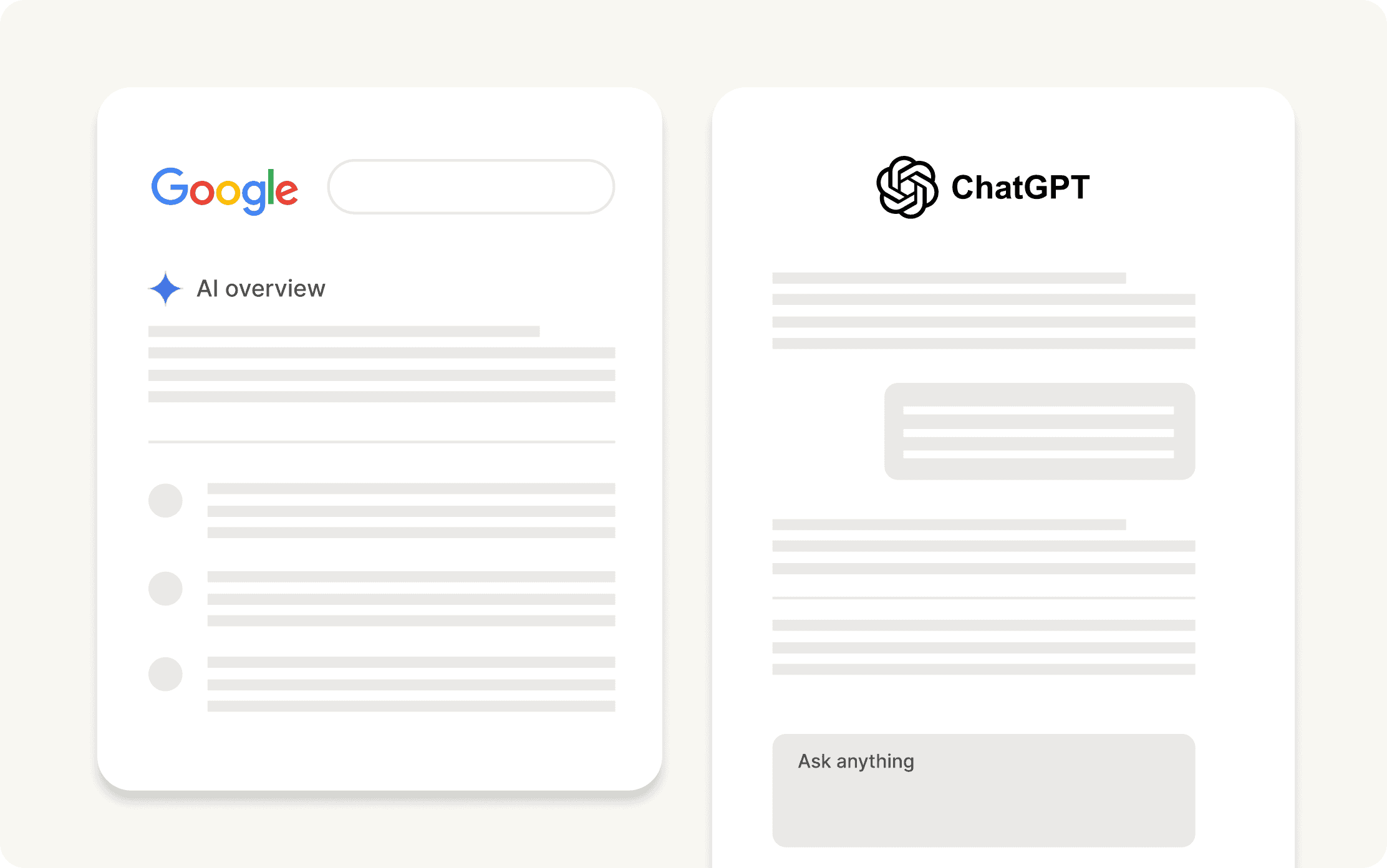
Maybe you’ve heard it mentioned before, but you’re about to hear it a lot more. GEO stands for Generative Engine Optimization. Where SEO helps you get found in Google, GEO makes sure that AIs like ChatGPT and Gemini understand your content and ideally use it as a source in their answers.
In this blog, we’ll explain:
- What GEO actually is
- How it’s different from SEO
- Why it matters for marketers
- How to make your website AI-ready
- And how we’re approaching it ourselves
So, what is GEO?
Generative Engine Optimization (GEO) is all about making your website easier to understand for AI systems, also called generative engines. Think of it as structuring your site and content in a way that tools like ChatGPT or Gemini can make sense of it, and hopefully cite it in their responses. The goal? To help AIs truly understand what you do and recommend you to potential clients.
GEO vs SEO: what’s the difference?
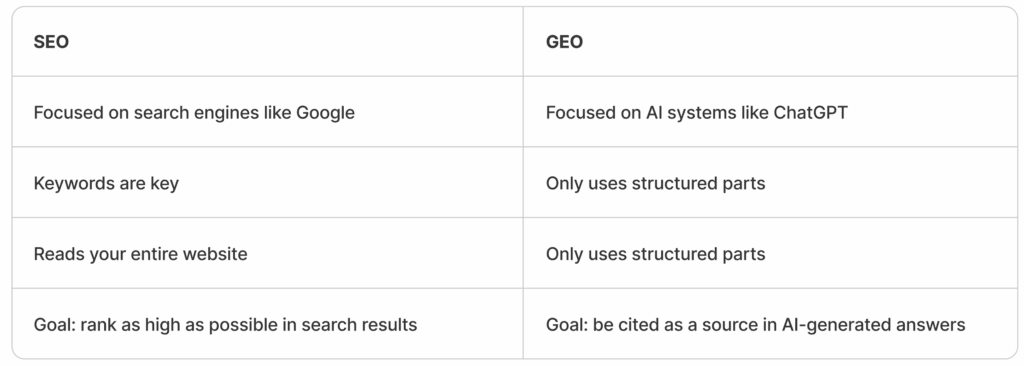
We’ve created a visual to show the difference at a glance. But in short:
- SEO is about being found by Google, which reads your whole site.
- GEO is about being understood by AI, which reads specific sections based on your website structure.
We will give you a quick example from our own website:
SEO content writing:
“Biotech is our specialty. We create impactful biotech websites.”
GEO content writing:
“We build websites for biotech companies that want to clearly explain complex innovations to investors, customers, and policymakers.”
The second version gives AI a much clearer picture of what you do, for whom, and why.
What makes a page GEO-ready?
If you want to start with GEO, a few things really make a difference. Our advice: learn a bit about it first before diving in.
1. Clear, easy-to-understand content
Avoid jargon and fancy buzzwords. Explain your product or service like you would to someone outside your industry. AIs are smart, but just like people, they need context.
And context is everything.
2. Good structure
AI doesn’t scan your site the same way Google does. You can help by:
- Using clear headings (H1, H2, H3)
- Sticking to one topic per page
- Adding internal links
- Avoiding duplicate pages like “web design” and “web design Amsterdam”
Think of your website like a book: AI needs to know where a chapter starts, what it’s about, and where it’s going. It won’t read every word.
3. Technical optimization
This part is even more important for GEO than for SEO. AI uses extra layers of information to understand your content. So we recommend (or your web developer does):
- Adding an
llms.txtfile: This is like a map of your most important pages. We include it by default on our newest sites—but you can improve it yourself too. - LLM-FULL: Longer summaries per page, which help provide extra context.
- Structured data (like via Yoast): Extra bits of code that explain what something is (like an article, a product, or a person). We also add this to our latest websites.
✅ Good news: We’ve already updated our own llms.txt file. It’s live and helping AIs better understand who we are and how we’d like to be used as a source.
4. Build trust (E-E-A-T)
AIs want to use reliable sources. Just like Google, they look for signs of: Experience, Expertise, Authority and Trust
Here are a a few simple tips to get started:
- Add author info to your blog posts or news articles
- Tell your story, who you are, how long you’ve been around
- Use real client cases or testimonials
Why should marketers care about GEO
You might be thinking: Why spend time on this new topic, is it not a trend?
However, AI tools are being used more and more for research. You’ve probably heard questions like:
“Which agency can help with a biotech rebrand?”
“What’s the difference between SEO and GEO?”
Or
“What should I eat tonight that is quick and healthy?”
If your website is GEO-ready, there’s a higher chance ChatGPT will mention your brand and link to your page.
How we’re doing it at Mars
We’re currently testing with different generative engines and working hard to make our own site GEO-proof.
Our llms.txt file is live, and we’re already working on the next steps.
We’re also looking at how to use what we’ve learned to help our clients. How can they be among the first to grow through language models?
And most importantly: we’ll keep testing, learning, and improving.
Because just like SEO, GEO keeps evolving.
Ready to get started?
Here’s the key takeaway:
GEO isn’t just a trend. It’s a new layer on top of your existing SEO strategy.
If you want your company to show up in AI-generated answers, now’s the time to start—especially since most companies haven’t jumped on this yet.
Want to chat about GEO or get help making your site AI-ready?
Feel free to reach out.
This page explains the difference between SEO and GEO, why GEO is important for marketers, how Marsmedia created and uploaded its own llms.txt, and how you can get started too.